

the fastest
2.0 TSI 265 VZ2 5dr DSG 4Drive
- 0-625.9s
- CO2
- BHP261.5
- MPG
- Price£47,240
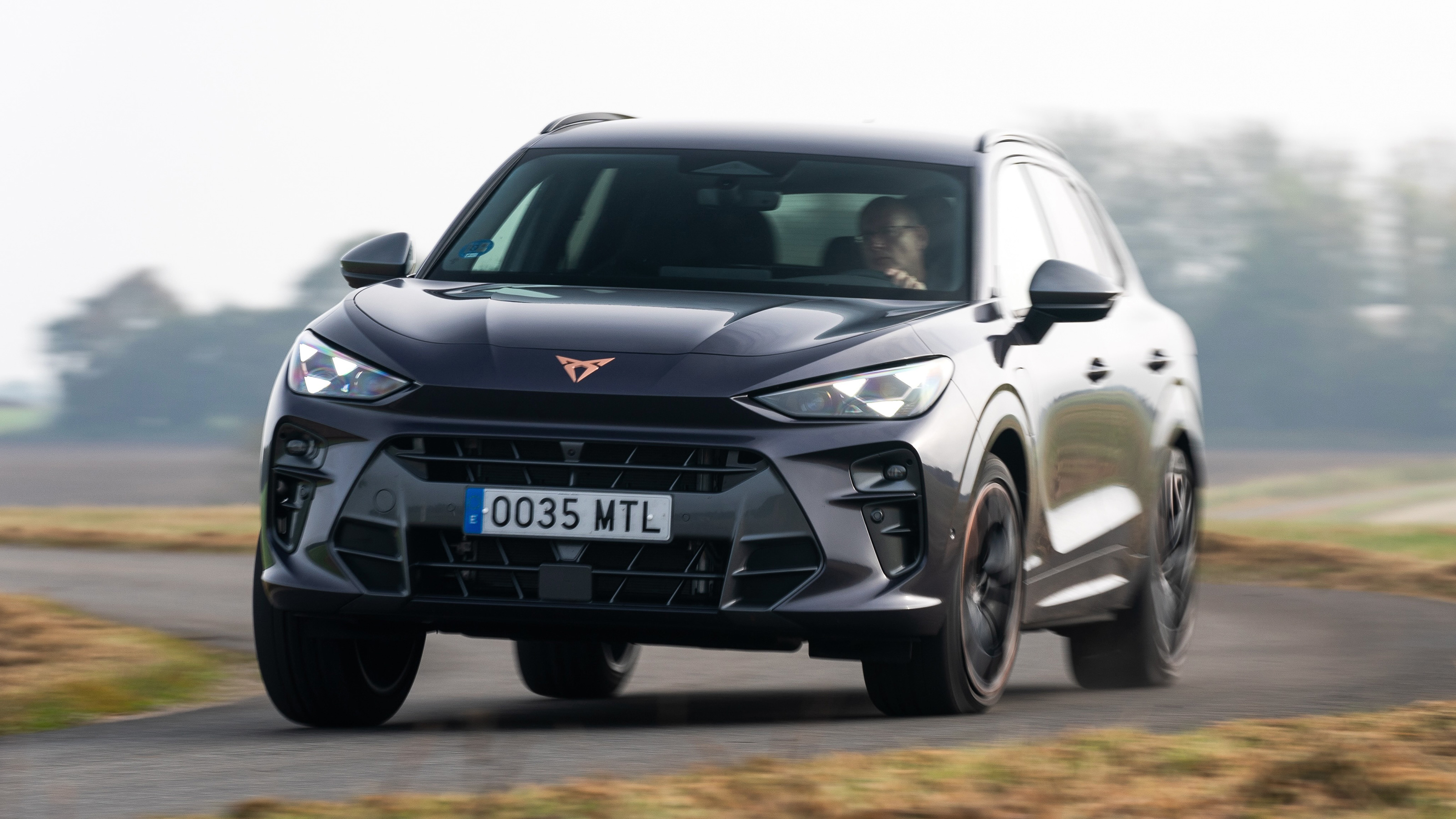
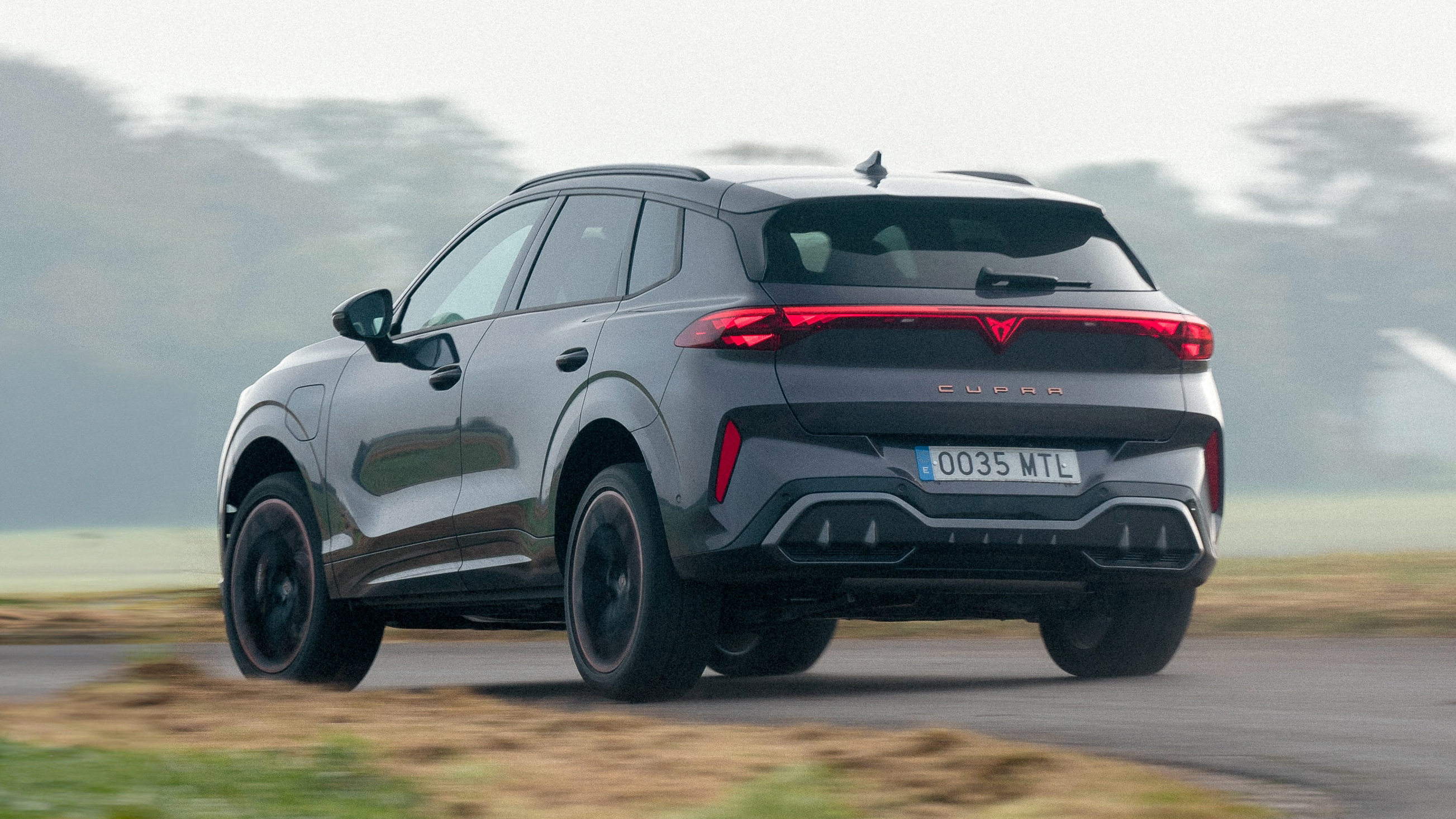
Many roads in Spain are as random in their corner radii, and as grumbly in their surfaces, and as exaggerated in their cambers as British ones. That's perhaps why we like the way Cupra's Spanish engineers (oh by the way, the Terramar is built at Audi's plant in Gyor, Hungary) tune their suspensions.
Particularly so because even base spec models get sports suspension, meaning the Terramar sits 10mm lower than its cross-platform rivals, the Skoda Kodiaq and VW Tiguan, as standard. It’s certainly on the firmer side compared to those two, and around town it can be a little crashy, but body roll is kept nicely in check and it settles down away from the city.
Sportier VZ trims get 15-stage adaptive dampers. Tall 'sports' crossovers often have an offensive ride with too much lateral rocking. But the Terramar uses its suspension and dampers better. The ride is genuinely supple over broken surfaces, and it retains that quality even if you set the dampers up a notch or two on the multi-point menu to quell body heave.
The steering remains pretty delicate and progressive and there's little on-board sensation of roll. That said, there's not a lot of feel or engagement to be found if you're over keen to lean into the 'sports' label. Despite the fact there's an actual physical switch to defeat the ESP.
The VW Group has upped its game on front-drive plug-in hybrids. There's a bigger 19.7kWh usable battery for longer range, and it can be juiced via a rapid DC post. Real world range is probably between 45 and 50 miles, but the hybrid system adds a quarter tonne to the base version's kerb weight, taking it to 1,900kg.
We sampled the topmost PHEV. It's a 177bhp 1.5 petrol plus a 116bhp electric motor. The total output isn't the sum of those because they crop up at different rotational speeds, but the all-up peak output is 268bhp across a wide rev range, and 295lb ft at a range of 850-4,750rpm. Those numbers apply in all gears because the motor is upstream of the six-speed DSG transmission.
Anyway, the result is a stout answer to your right foot across wide rev ranges, and pretty decent urban performance even in the electric only mode. Then the hand off between electric and petrol-electric power is quiet and free of clonks. In normal driving it actually has most of the smoothness and quietness of an EV.
Unless that is you're in the Cupra drive mode, which pipes in some slightly ridiculous fake noise, boomy and croaky like a wounded water buffalo (we imagine). But that noise disappears when the engine stops, so the car goes from raucous to hushed and back. You can't force it to keep the engine running.
Still, unusually for a PHEV you can put it in sport mode and actually have full control over the gears via paddles. But it still feels pretty strange because the engine will die on the overrun. Because at that point it declutches, you don't have lift-off control over your cornering attitude. Of course that sort of driving is an edge case that few buyers will explore. But if Cupra is calling this a sporty crossover, we felt we needed to test it.
The brake pedal is good, largely avoiding hybrid-typical mush or uncertainty.
We tested the 2.0-litre turbocharged four pot in its more potent 261bhp/295lb ft form. It's a strong engine and offers decent shove when required, although the seven-speed DSG 'box does hamper progress a little as it attempts to stick in the highest possible gear for maximum efficiency and sometimes refuses to kick down.
Of course, there is a sportier Cupra mode, but as with the PHEV that leads to faintly ridiculous fake noise being pumped into the cabin. Switch that off and the Terramar in this trim is a quiet and comfortable cruiser. Again there's good feel to the brake pedal and the steering gets some proper weight in the car's sportier modes.
Cupra claims an official 33.6mpg, and on a mixed route with town, country and a little bit of motorway driving we saw 27.2mpg. There's a sense that four-wheel drive is probably overkill in a medium-sized SUV such as this, but it does give this particular Terramar a max towing weight of 2,200kg.
We’ve also sampled the entry 1.5-litre turbo four pot, which gets a teeny bit of mild hybrid assistance. It sends 148bhp to the front wheels, again through a seven-speed DSG. It’s a pretty good setup, with the e-assistance helping minimise any turbo lag at lower revs, though it is prone to wheel spinning on occasion.
Still, it’s the obvious choice if you’re eco-conscious, with the system recovering energy under braking to support the engine whenever required. Cupra claims 47.1mpg WLTP in lab conditions – again on a mixed route we saw 38.1mpg.
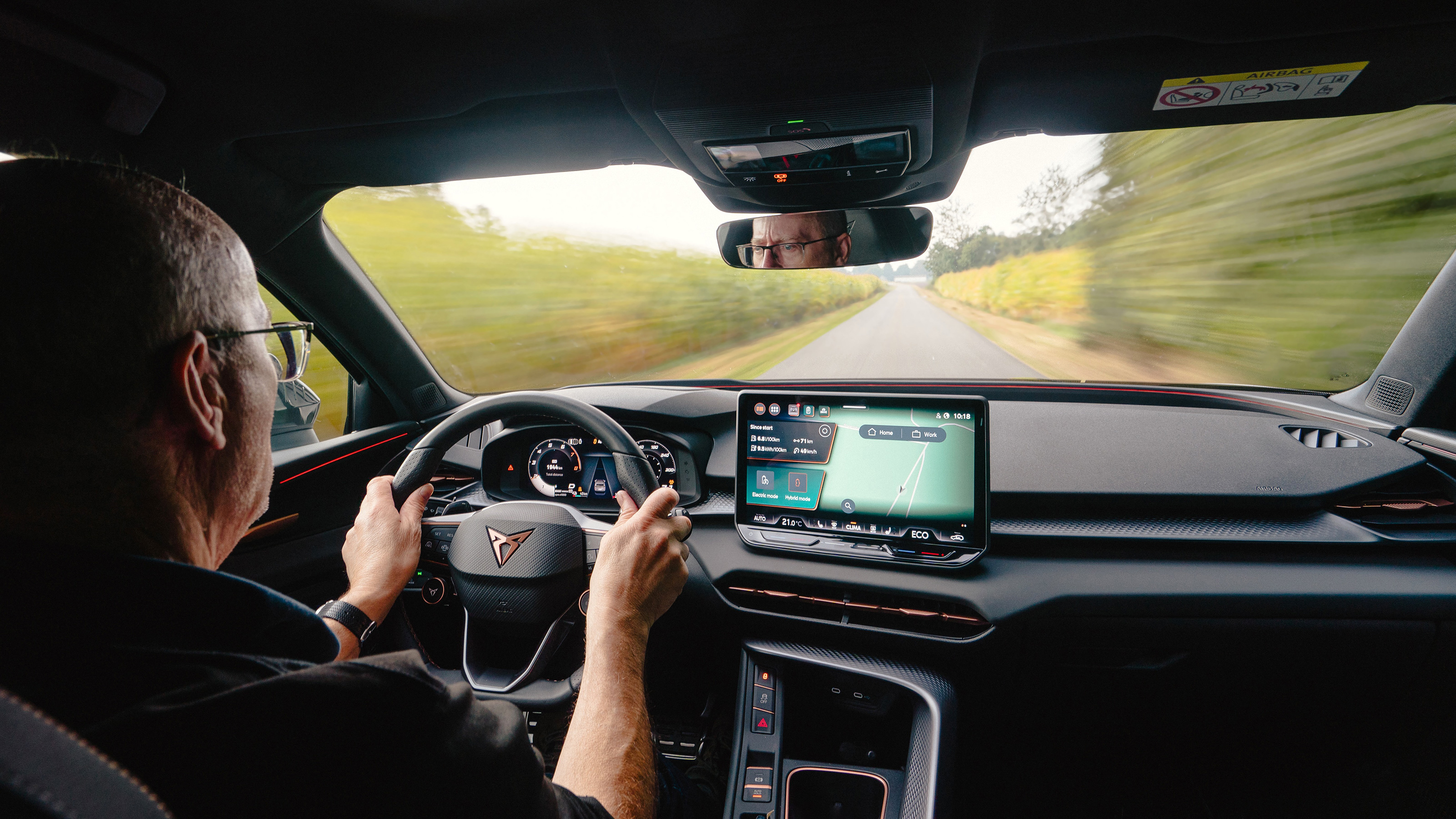
Yeah, it's all there, including adaptive cruise with lane centring, which works in jams too. It also slows you up predictively on approach to roundabouts and junctions and speed limits.
The driver assist functions can be switched using steering-wheel buttons and menus on the driver's instrument screen rather than the centre screen. A good thing as it doesn't signal to nervous passengers that you're turning off speed or lane warning. Which you might want to do because as with all cars it can get things wrong.
Thank you for subscribing to our newsletter. Look out for your regular round-up of news, reviews and offers in your inbox.
Get all the latest news, reviews and exclusives, direct to your inbox.