



20
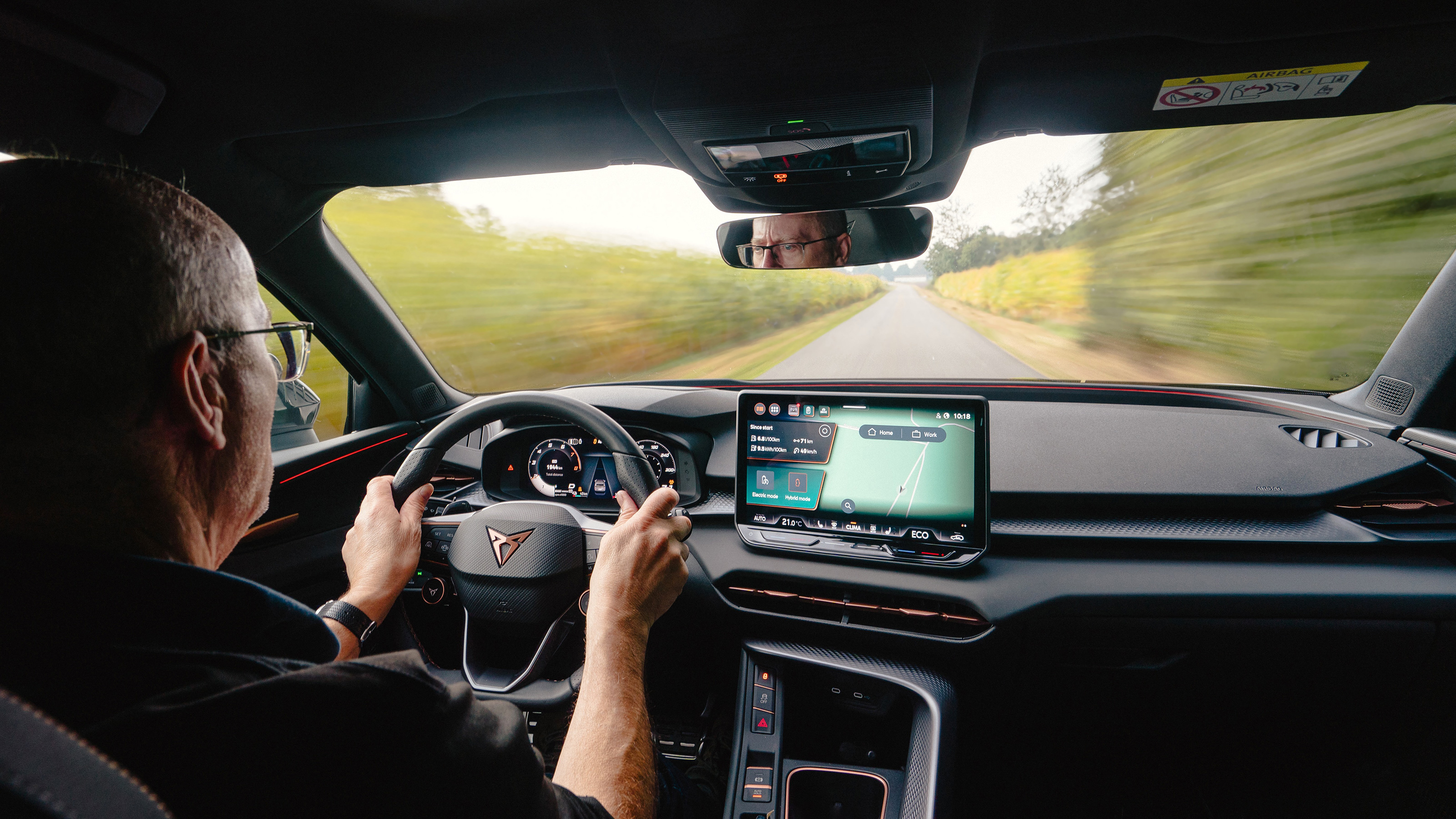
The cabin is a riot of shapes and materials: fake metallic plastic, and fake suede, and copper coloured accents. OK they're imposters but they feel high quality. Ambient lighting twinkles through perforations in the door fabric. The seats have ventilation channels like the back of a rucksack.
It is, but it hangs together pretty nicely, and overall we like the effect.
It's ergonomically excellent too. The steering wheel has lots of buttons and rollers with a positive tactile operation. Extra buttons on the wheel handle drive modes and engine start, and the auto ‘box drive selector is on a stalk. Which makes the left-hand stalk a bit busy as it's handling lights and wipers, but you get used to it.
The centre screen is the VW Group's recent generation, it's 12.9in and is pretty quick to respond and with useful configurable buttons and shortcuts to switch off some of the more intrusive active safety systems (just swipe down from the top of the screen). A Sennheiser stereo is a £420 option, and very satisfying it is too. The driver display is another 10.25in screen with lots of configurable views.
After the superb front seats in the VZ trims, the rears are a bit of a letdown as they limit light back there. Still, overall the room isn't bad and there are vents to keep you cool. Actually the bench slides so you can suit your people/baggage balance.
In the 1.5-litre mild hybrid and 2.0 4WD, it's 540 litres with the back seats upright, rising to 642 litres if you slide the bench to its forward-most position. Pretty good going, considering that’s just shy of the VW Tiguan.
The plug-in hybrid needs a battery as well as a fuel tank, so the boot is shallow, just 400 litres seats fully back, rising to 490 litres seats forward – matching the Tiguan PHEV for size. So not to be sniffed at either, but worth noting.
Thank you for subscribing to our newsletter. Look out for your regular round-up of news, reviews and offers in your inbox.
Get all the latest news, reviews and exclusives, direct to your inbox.
