

VOLKSWAGEN
2.0 TDI Ocean 5dr DSG
£77,170
Drives better than ever, designed by people who actually camp
Let down by VW’s previous gen infotainment, the California is always pricey
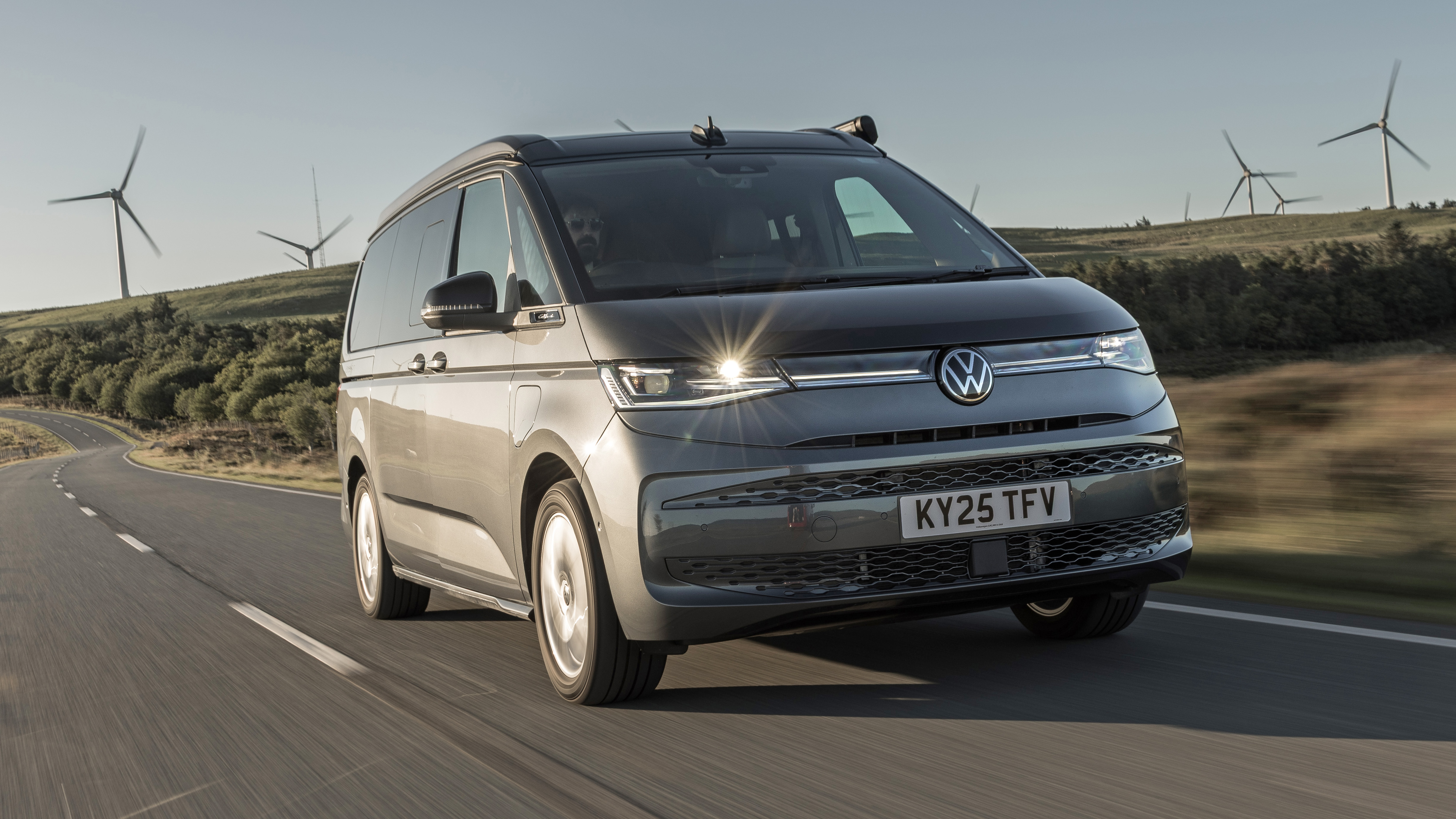
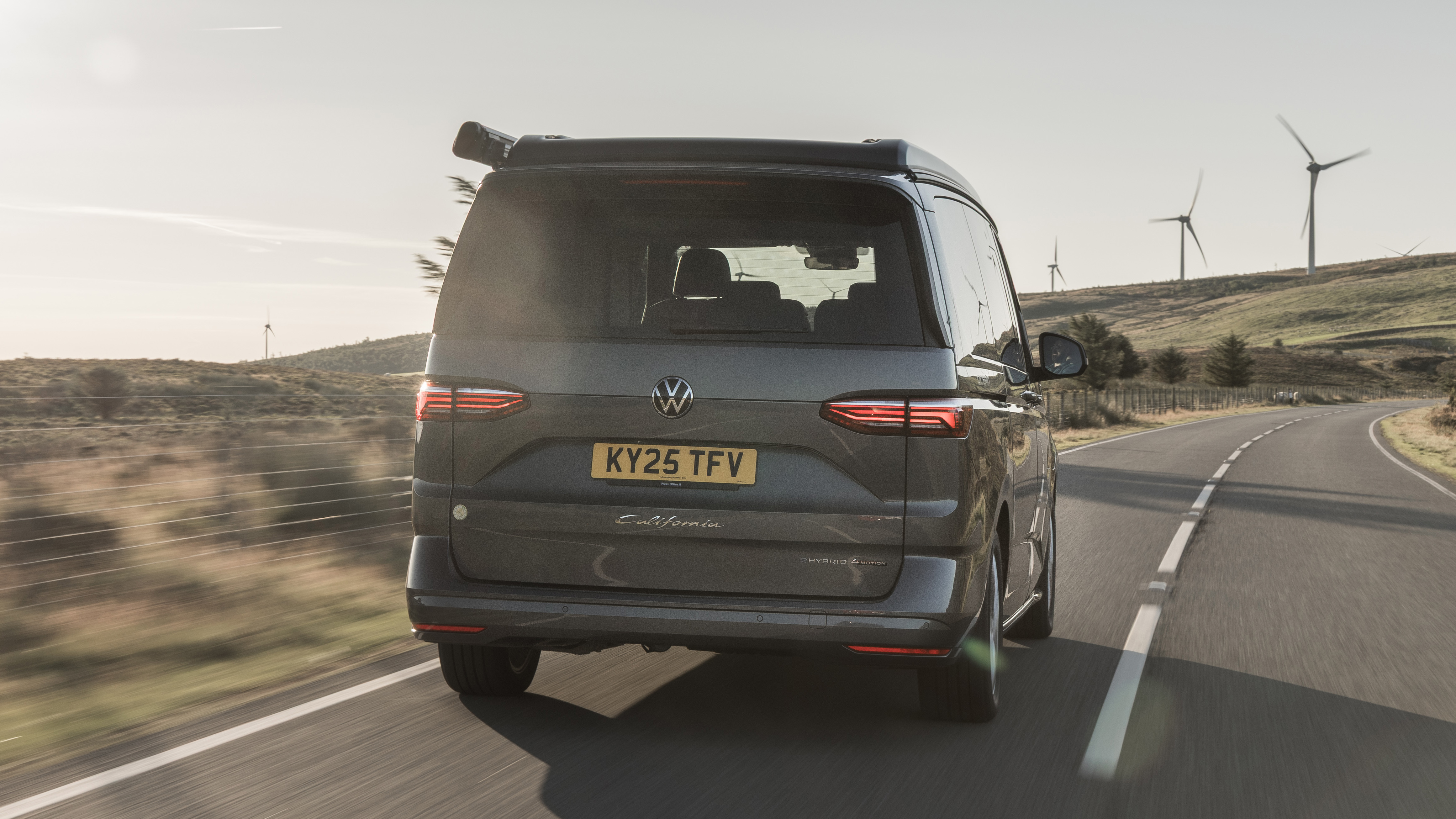
It’s an icon. It’s the latest and greatest Volkswagen California. The archetypal campervan.
VW has been making campers since the 1950s, although technically until the turn of the century they were all built by Westfalia. When Westfalia was bought by Daimler-Chrysler in the early 2000s, VW decided that it needed to go it alone with Transporter-based campers and introduced the California name.
It’s worth noting that the moniker is used across VW’s campervans these days too, so while the van you see here is just known as the California, it sits in between the smaller Caddy California and the big boy Grand California.
Well, there’s a fairly major change right from the off, because the California camper is now based on the Volkswagen Multivan rather than the Transporter van. The Multivan arrived back in 2021 and is based on the same MQB platform as the Golf, so while it may look exactly like your typical van, lots of the underpinnings are actually car-based.
For a start, the new California is bigger than ever. It uses the longer-wheelbase Multivan as its base, so it’s 270mm longer and almost 40mm wider than the previous T6.1 Transporter-based Cali, although the height remains the same to make sure that it’ll still fit in multi-storey car parks. We’re told that height is why VW decided to use the Multivan as a base rather than the new Ford Transit-based Transporter.
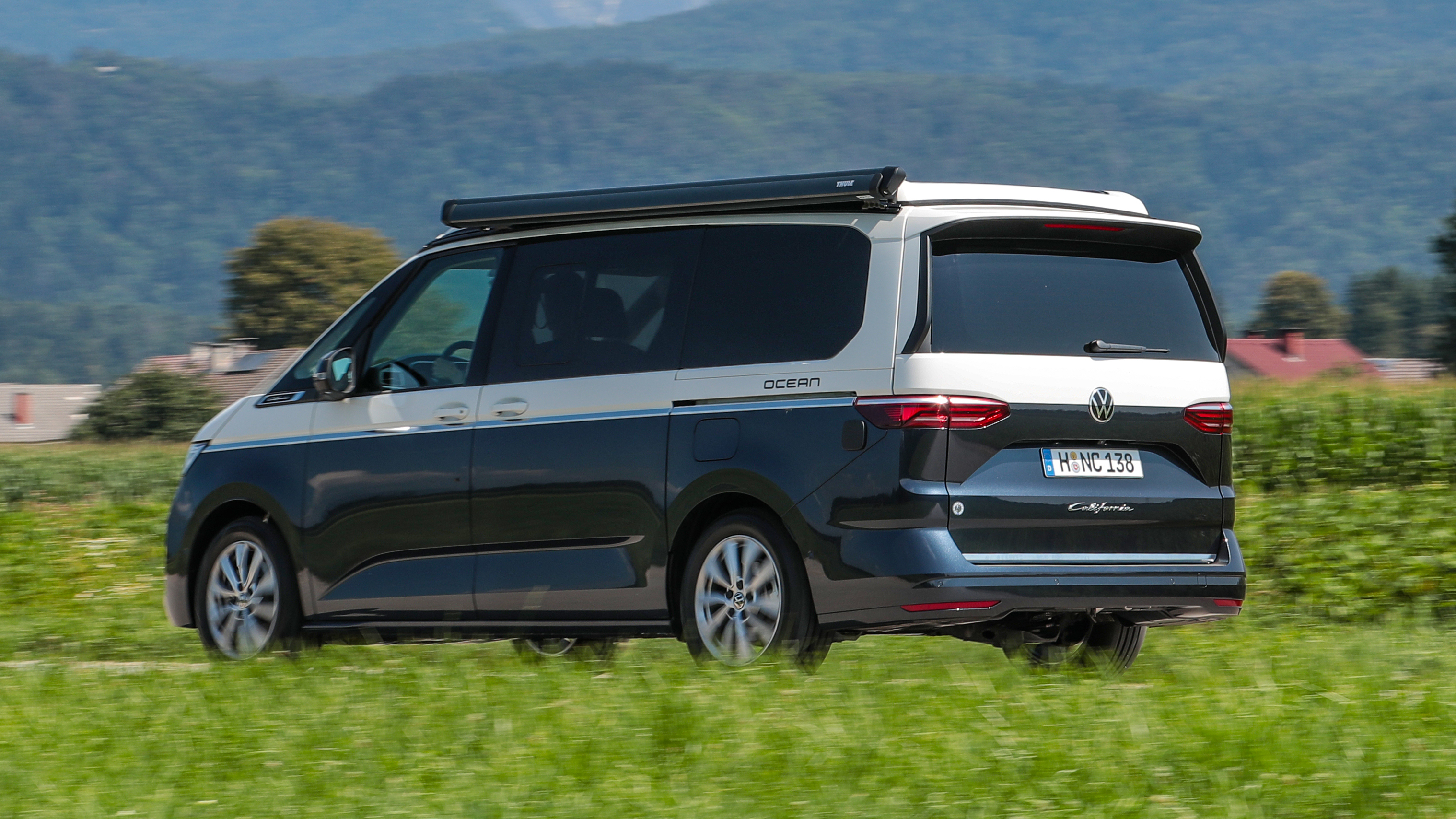
Looks neater than before though, don’t you think? The Multivan optionally gets the classic two-tone paintwork that we’re used to seeing on VW campervans, and the overhangs don’t look that awkward despite that long wheelbase.
The other major change that VW’s Commercial Vehicles arm is shouting about is the fact that all Californias now get sliding doors on both sides of the van. We’re told that this creates a new “three-zone concept” for living, which essentially refers to the space inside the van, then outside on either side. Still, it means that in theory you could stick an awning or tent on both sides, so that’s pretty neat.
Some things couldn’t change of course. All Californias still get a pop-up roof no matter the spec, and the interior is full of neat little storage solutions and easter eggs (not literally, sadly, though they'd keep in shape in thge fridge...) to make your camping experience that little bit more luxurious.
As you might expect, diesel is still on the table. You can have a 2.0-litre turbocharged four-cylinder that’s badged TDI and makes 148bhp and 266lb ft of torque. That's your entry point.
If you want a bit more poke, the 2.0-litre turbocharged petrol (badged TSI, as with all VW products) makes 201bhp and 236lb ft. Not that it really matters, but that also ups the top speed from 117mph to 124mph.
Both the petrol and diesel power the front wheels alone, but now for the first time in the California you can have a plug-in hybrid powertrain that drives all four wheels. That pairs a 1.5-litre turbocharged petrol engine with a single electric motor and 19.7kWh battery to provide 242bhp and around 50 miles of electric-only range. It can charge from 0-100 per cent in 2.5 hours on an 11kW AC charger, or from 10-80 per cent in under 30 minutes on a rapid DC device.
There’s more detail over on the Buying tab of this review, because if we went through all the variations here, you’d lose the rest of your day. Still, it’s worth knowing that the California comes in Beach, Coast and Ocean trims. The former is the cheapest and the most car-like, with five seats in the cabin and space for two people to sleep under the pop top roof. As you go up the trim levels, you get more camping equipment, more bed space and fewer seats.
Coast and Ocean Calis both add a kitchen inside, whereas the Beach has a roll-out draw from the boot with a gas hob for your morning coffee and eggs. No versions pack a toilet - you'll need a Grand California for that - but you can have a clip on shower at the rear. It runs cold, and is primarily for rinsing muddy boots or suchlike, but you could wash with it if you're hardy...
A lot. But it'll probably retain a surprising amount of that as a used buy, so with some careful calculations, it's possible to argue this is an investment. Certainly more so than most other brand new cars. Prices start at a whisker over £63,000 for a California Beach with a diesel engine. Want the 4WD hybrid? It's another eight grand on top of that.
The Coast, with its more luxurious interior, indoor kitchenette and electrically raised roof, starts just under £71k in diesel form. The pure petrol adds three grand to that; the hybrid another five. The range-topping California Ocean adds smarter campsite heating options plus Travel Assist self-driving and matrix LED lights to aid rural navigation. It costs £77,500 diesel, £80,500 petrol or £85,500 hybrid. Which equates to many years of all-inclusive holidays somewhere sunny where you don't have to slide a door open and head outside to pee in the night. But if your lifestyle (and budget) fits, it could be a piffling cost to pay for the freedom a Cali opens up...
As expected, the California remains a brilliant campervan. It’s all extremely clever and it’s clear how much thought has been poured into the interior design. It’s a camper that’s designed and built by people who actually camp. Handy.
With every generation, the California gets yet cleverer features and upgrades to make life in the wild that little bit easier. The move to the Multivan has made this latest generation the best driving Cali ever, too, and although you’re stuck with an annoying infotainment system, it really is a wonderful way to holiday.
Those two sliding doors allow the camper to be central to your setup rather than being merely a bed that’s tucked away at the side of the pitch. Tech flourishes like semi-autonomous driving and the eHybrid's silent running ease yet more potential strain from far-flung rural trips. We'll see you at the campsite...
Thank you for subscribing to our newsletter. Look out for your regular round-up of news, reviews and offers in your inbox.
Get all the latest news, reviews and exclusives, direct to your inbox.