



20
Jeep Wrangler Rubicon
1995cc
268.2bhp
There’s a unique TopGear.com commenter tone – half concern, mostly outrage. Like user Nick T, who fired off his verdict on our kryptonite-green Jeep and its shiny new hardware: “Is this going to be driven off-road or is it all for posing?!" he asked.
Well, Nick. This one’s for you.
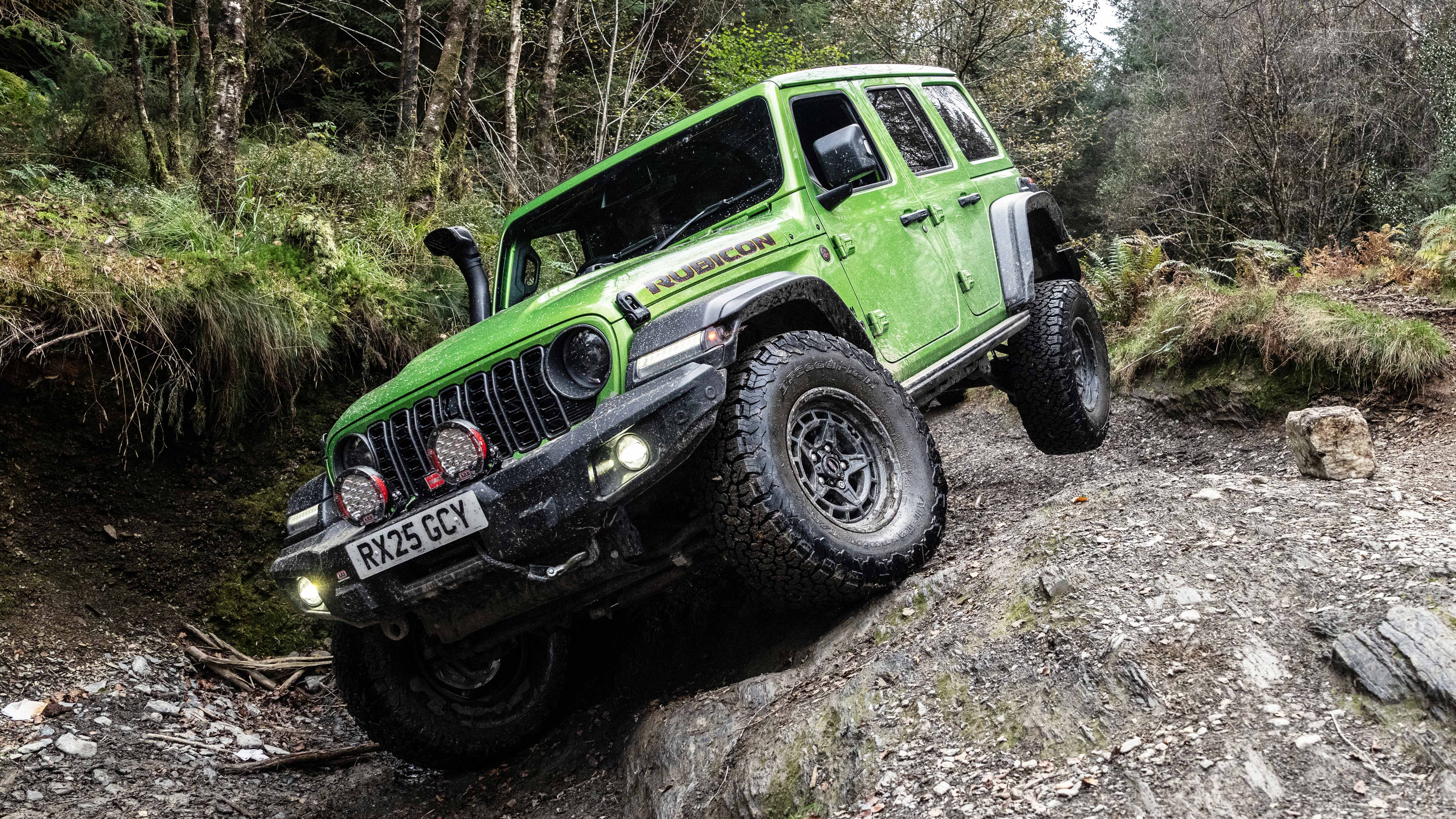
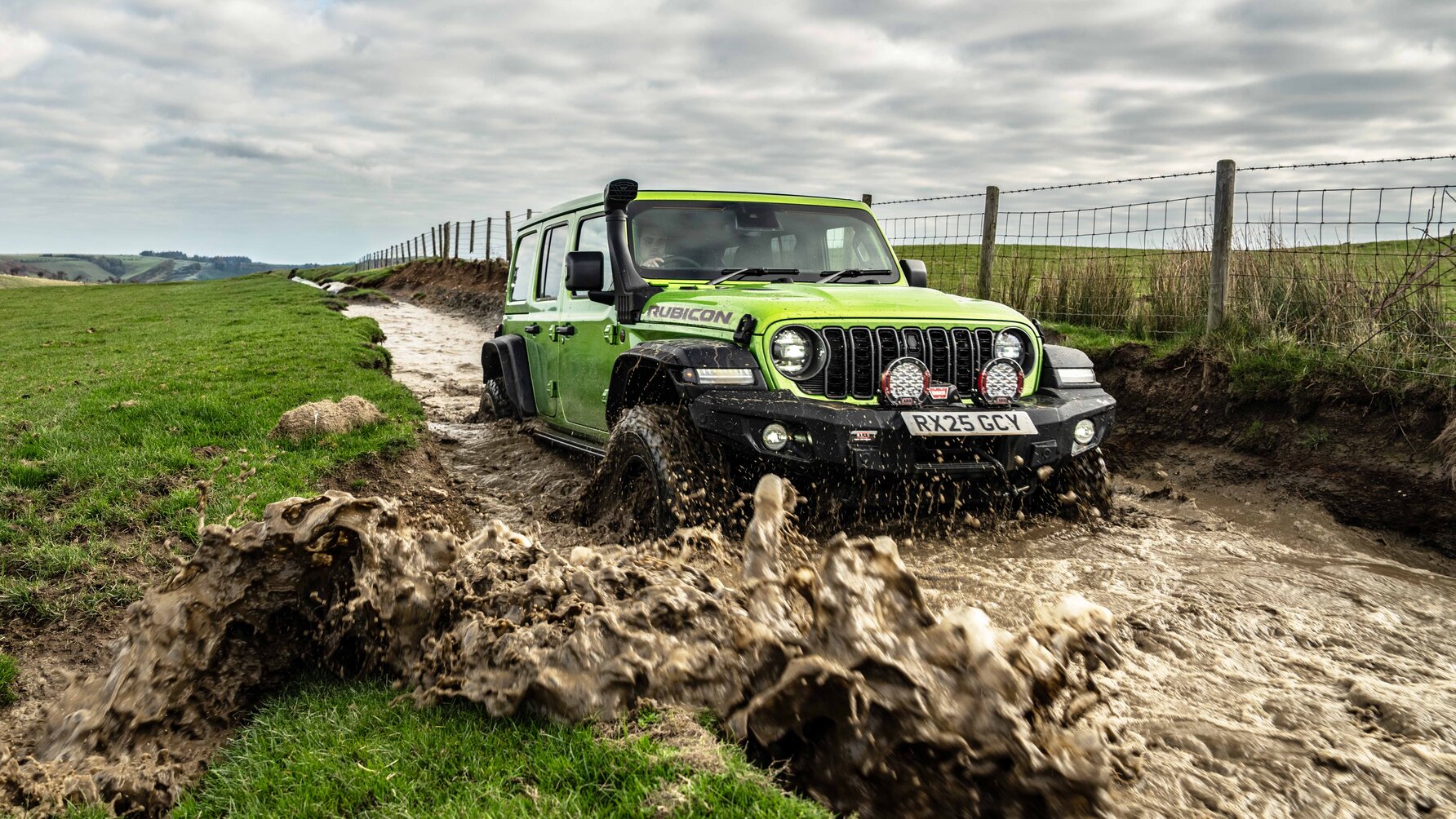
Because those pictures you see of the Wrangler dangling an axle and cocking a wheel in mid-air are not taken in a gravel car park outside a farm shop. That’s proper Wales and the Jeep is very much off the road… posing. Which, as I’ve now discovered, it’s rather good at. Before we get up to our wheel nuts in mud, we need to rewind, because quite a lot has happened since we first rolled out of Storm Jeeps.
I noticed at motorway speeds it was tugging left with real enthusiasm. The boys at Storm threw a new steering damper at it to try and calm what might have been camber sensitivity from the wider, bigger tyres. But that didn’t cure it. So, once I was back down south, it went on an alignment rig and had its geometry corrected.
Then came the windscreen saga. The first cracked screen was replaced… which promptly upset the ADAS systems. Cameras and sensors threw a fit, which – whisper it – I didn’t entirely hate, because it meant lane departure and speed warnings politely shut themselves off and stopped bonging every five minutes. Though, they were supposed to return the car working, so a second screen went in, everything was recalibrated, and the digital helpers came back online.
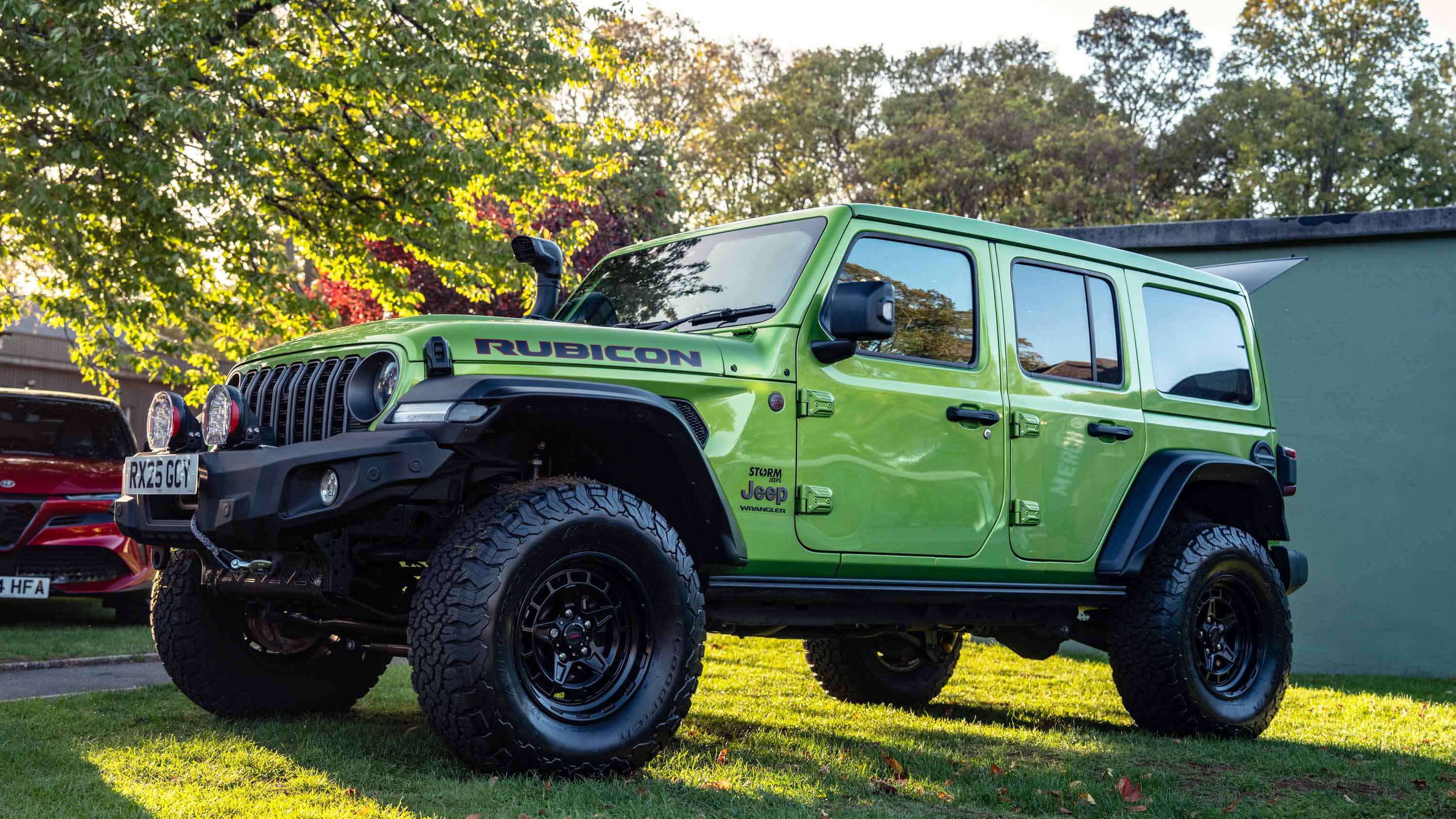
At least it was ready for Bicester Scramble, where it was plonked on display like a big green climbing frame. There has been a big difference with the mods on – not just because it now gets even more attention from kids, adults and anyone briefly blinded by its new lights, but because the tyres have completely changed the way it behaves.
From the factory the Jeep was on skinnier, firmer, knobbly mud-terrains that were hilarious in the dry and absolutely horrible on a cold, greasy B-road. Huge tread blocks and a hard compound meant far less rubber actually touching the tarmac; braking distances grew, the traction control light became a permanent part of the dashboard furniture, and every wet roundabout turned into a lesson in oversteer. Which was hilarious.
Now it sits on broader, taller BF Goodrich all-terrains with a flatter, more road-friendly footprint and tougher sidewalls. With fresher rubber, the whole car has calmed down. Hit standing water on the motorway and, instead of skating across it like a Labrador on lino, the Jeep just thumps through, straight and sure. Stamp on the brakes in the wet and you get a decisive, drama-free stop. The compound, tread pattern and contact patch all work with you rather than against you and, now that winter has properly moved in, the Wrangler feels planted instead of perpetually one mistake away from a hedge.
It’s quieter too. Not quiet – it’s still a bluff-fronted brick on big tyres – but where the old muds produced a constant roar, the new rubber has dialled the noise back so you can actually hear the engine working. Which is both nicer and a reminder of the other big change in the Jeep’s character: fuel consumption.
Since the work was done I’ve been doing old-fashioned tank-to-tank maths. Over the last month the Wrangler has averaged 15.9mpg. On a steady motorway slog up to North Wales it did 14.1mpg. Fourteen. In 2025. That’s the sort of figure you used to see tucked away in a corner of a V12 road test. Under the bonnet there is, of course, no V12 – just a 2.0-litre turbo four trying its best to feel larger than it is. On paper it looks fine: 272bhp and 295lb ft. In the real world, with extra ride height, more weight and a wall of tread blocks shoving air out of the way, you can feel it working hard.
It will cruise, it will overtake, but in low range, inching up a slimy rock step at 2,000rpm, you do find yourself thinking about a lazy straight-six or a big V8 that wouldn’t have to try quite so much. As it is, the four-cylinder copes, but it rarely seems relaxed.
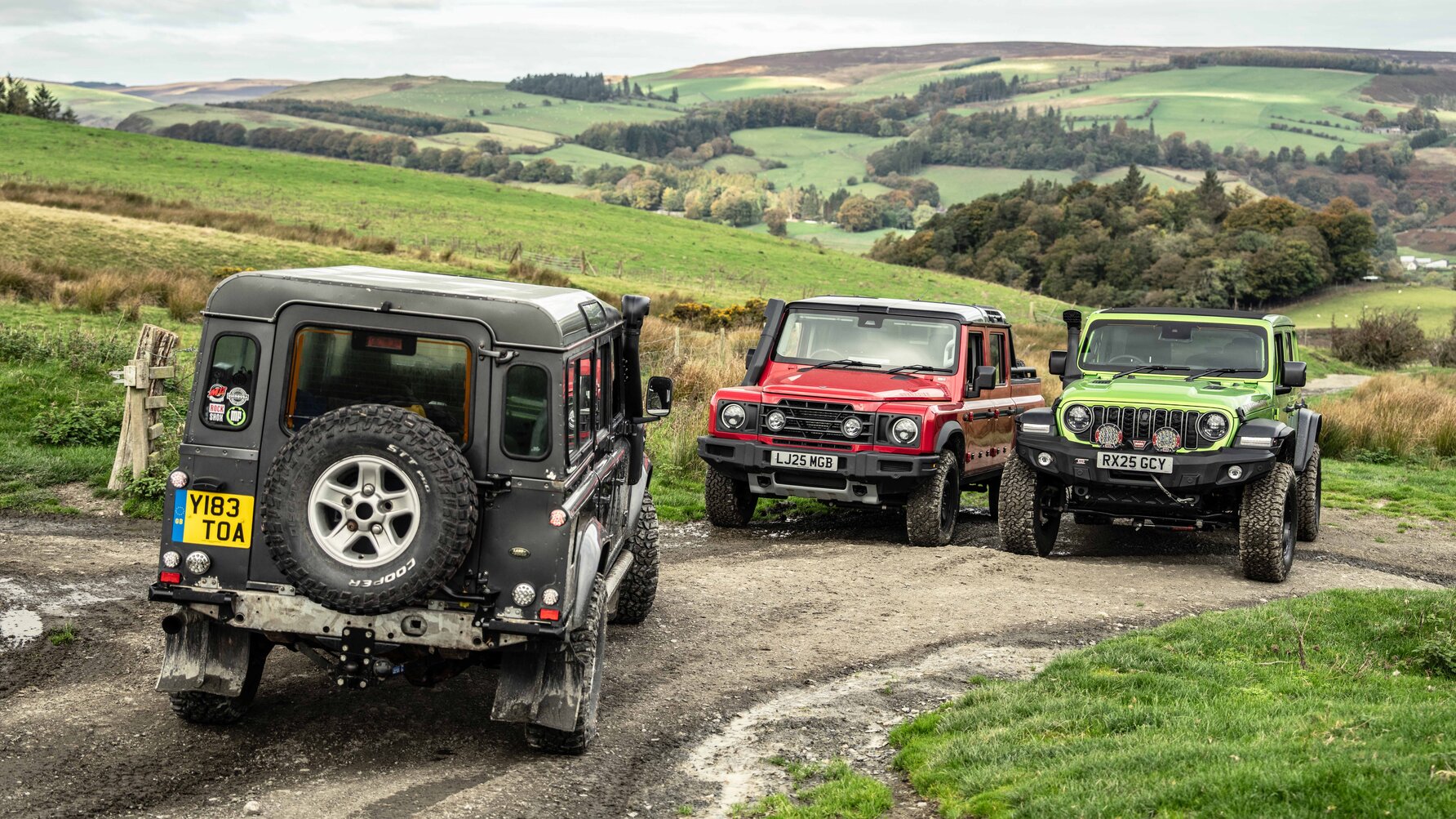
The real test, though, was the off-road recce run in North Wales. We’ve been plotting a feature and YouTube film with some properly serious off-roaders – an Arctic Trucks-massaged Land Cruiser, Land Rover’s Defender Octa and an Ineos Grenadier on portal axles – and needed to know whether the lanes would accept them, or simply wedge them in place like corks. The Grenadier, in particular, is so wide it looks like it’s been built to a different scale. So the Wrangler went first as scout, the Mojito Green canary in the coal mine with number plates.
This is where the benefits of the mechanical changes really show. One of the joys of the Wrangler, in an age where every SUV has a dozen anonymous drive modes, is the simplicity of its controls. Instead of poking around a touchscreen for “Mud + Expert”, you grab a stubby lever next to the gear selector and physically tell the transfer case what you want. On the road, you sit in 2H – honest rear-wheel drive. When the heavens open or the tarmac turns into a farmyard, you knock it into 4H Auto and let the system quietly shuffle torque between axles when things get slippery.
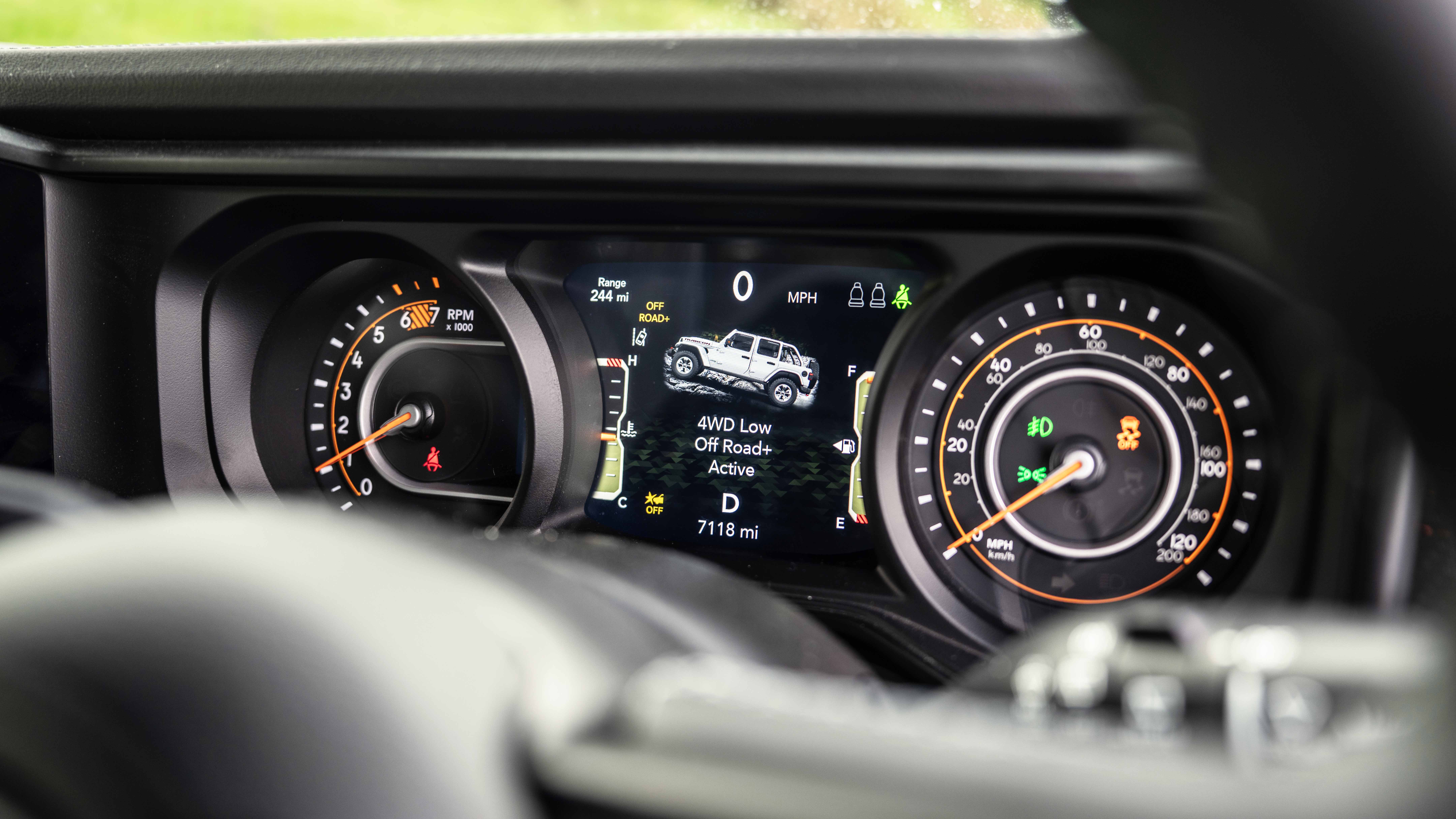
Turn off the road properly and you move to full-time 4H for loose, scrabbly tracks. Then, when the gradient steepens and the surface turns from “gravelly” to “somebody’s spilt a river over this”, you haul the lever back into 4L. Everything slows down to walking pace, you get proper control on the throttle, and you stop feeling like you’re bouncing something fragile down a track.
Layer the locking differentials and detachable front anti-roll bar on top and the car changes character again. Rear diff lock in deep ruts, then front and rear together when it gets serious; sway bar disconnected when you want the front axle to move freely and keep the tyres pressed into the ground. There’s no delay, no sense that software is arguing about your request. You pull or press, something clunks underneath, a light appears on the dash and the Jeep just does it.
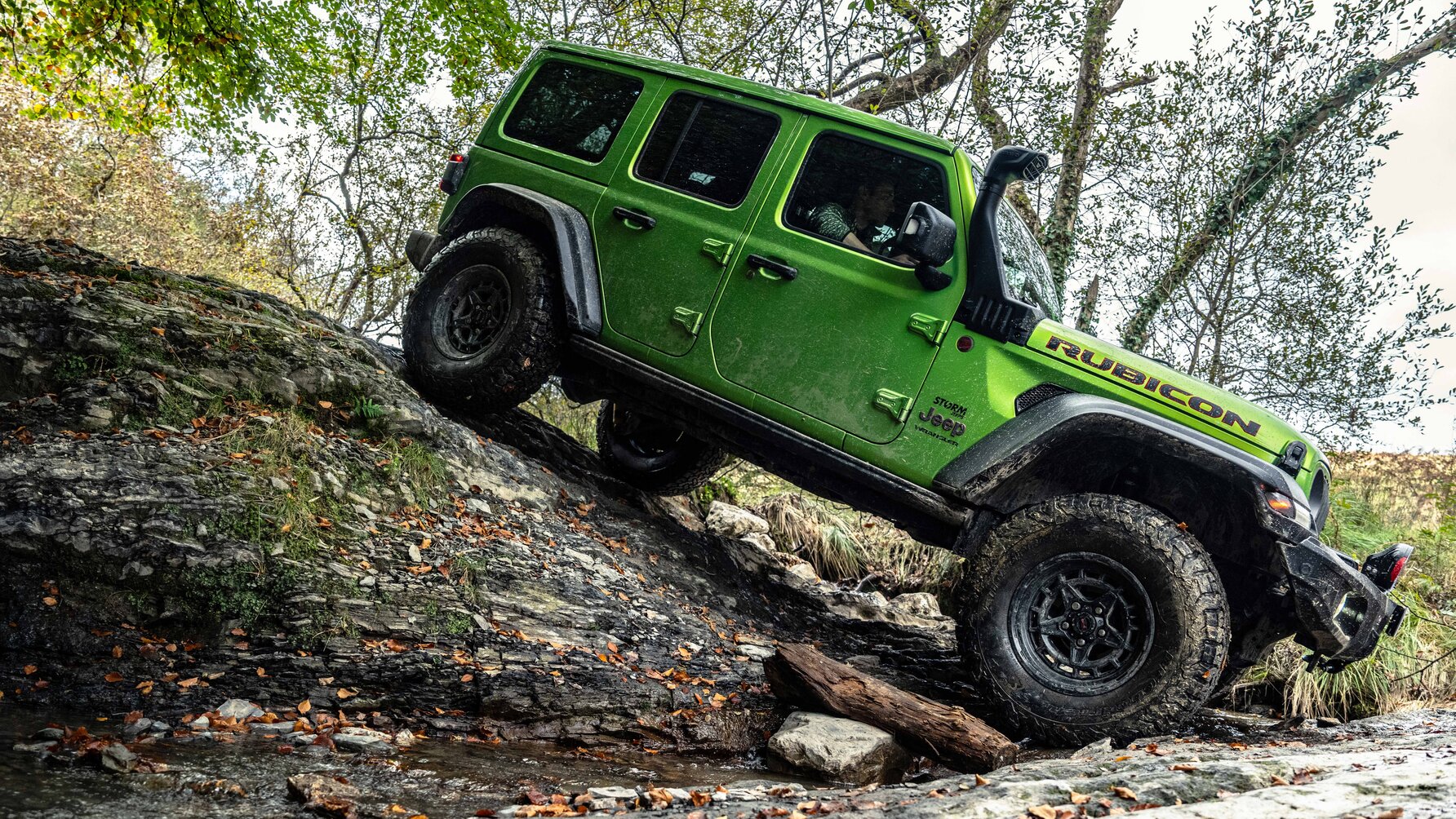
Out in the lanes, the result is obvious. Where a standard Wrangler on narrow mud-terrains would have skated and slipped, this one simply digs in and goes. The all-terrains cut through slime to something solid, the longer-travel suspension drops into ruts rather than bouncing across them, and the body moves slowly and predictably while the axles get on with the complicated bits. Drop into an offset pair of holes and you feel the shell tip, pause, then level again as one wheel hangs and the others keep their grip. Inside, you’re not bracing for impact – you’re watching it work.
The only time the hardware complains is at maximum articulation, when those larger wheels and tyres finally meet the limits of the bodywork. In one particularly deep, twisted rut the right-rear dug so far into the arch it neatly popped the plastic extension off. No real harm done – just a loud “thunk” and a quick stop to cable tie it back on – but a reminder that when you let a Wrangler flex this much you’re right at the edge of what the shell was designed for.
The other upgrades contribute more quietly. The cleaner, higher-clearance front end means you can nose down steep, rocky drop-ins without wincing. The winch tucked into the bumper changes your mindset even if you never unspool the rope – knowing you can get yourself out makes you braver about going further in. The snorkel stops every water crossing from feeling like a gamble on whether the engine will inhale a lungful of Welsh sludge. And when daylight disappears, the extra lighting turns the black lanes into something you can actually read: ruts, rocks and puddles picked out properly rather than as a vague grey patch beyond the bonnet.
The Jeep did so well on the recce that I came back arguing it should be in the big test, convinced that with its Storm Jeeps work it deserved a place alongside the heavy hitters.
So, to answer the question properly: no, this hasn’t become a Chelsea tractor on stilts, built solely for likes and lattes. It’s been driven hard, has just ticked past 10,000 miles and has spent a decent chunk of that off-road, deliberately taken somewhere difficult and asked to earn its keep. The changes have made it better everywhere that matters – steadier on the motorway, far more trustworthy in the wet and massively capable off-road.
The full Wales feature with the big-gun off-roaders is coming soon, with video to match, and at some point a certain anonymous individual in white will inevitably get the keys to see how far it can really be pushed. My money? The underrated, often forgotten Jeep will surprise a few people.
Thank you for subscribing to our newsletter. Look out for your regular round-up of news, reviews and offers in your inbox.
Get all the latest news, reviews and exclusives, direct to your inbox.
