

the fastest
170kW Long Range GT 97kWh 5dr Auto
- 0-629.6s
- CO20
- BHP228
- MPG
- Price£54,775
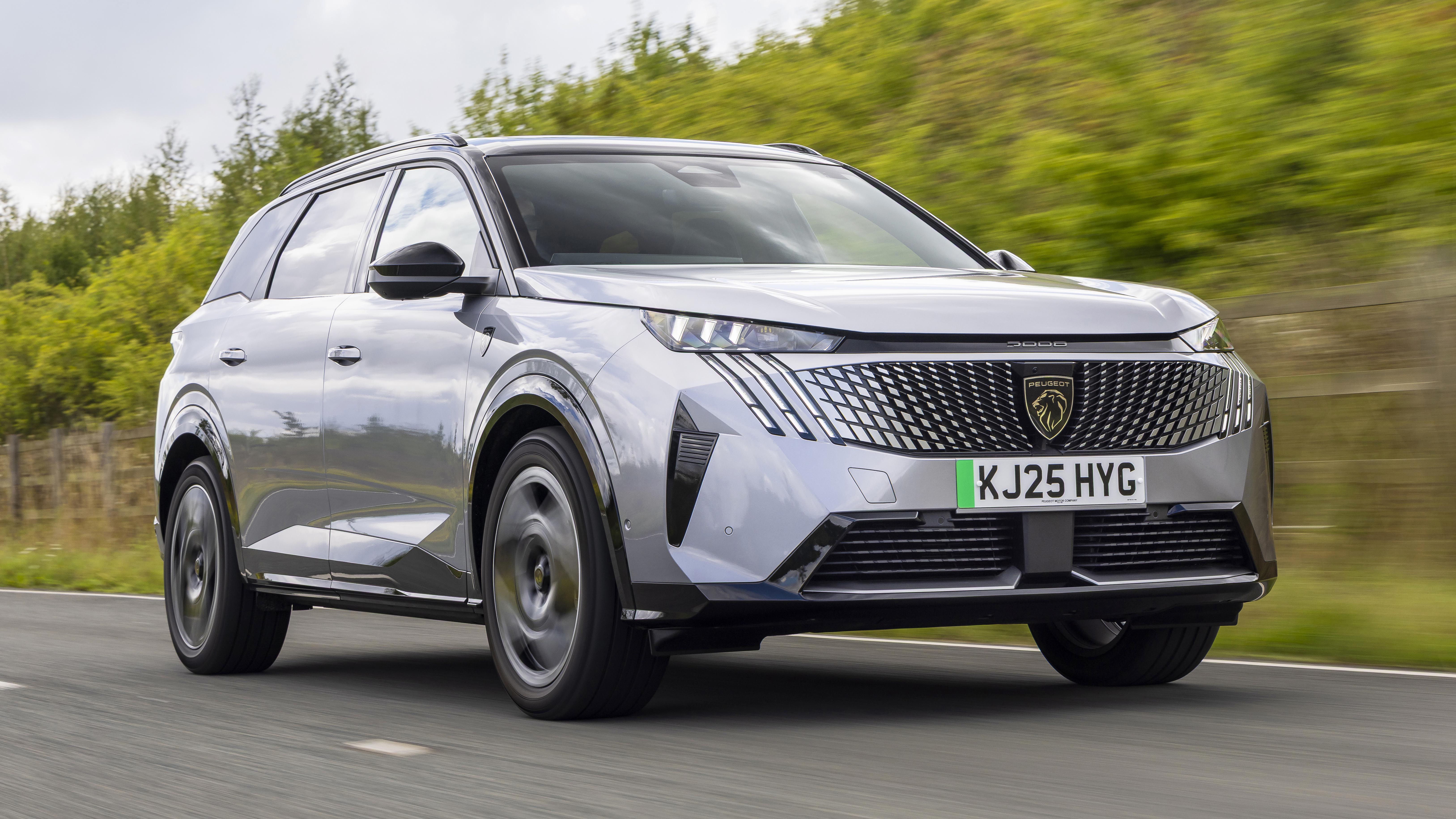
Better than you think it will. The e-5008 benefits over its hybrid siblings thanks to all that battery mass slung low in the middle of the car, which means it will cling on grimly through all sorts of corners.
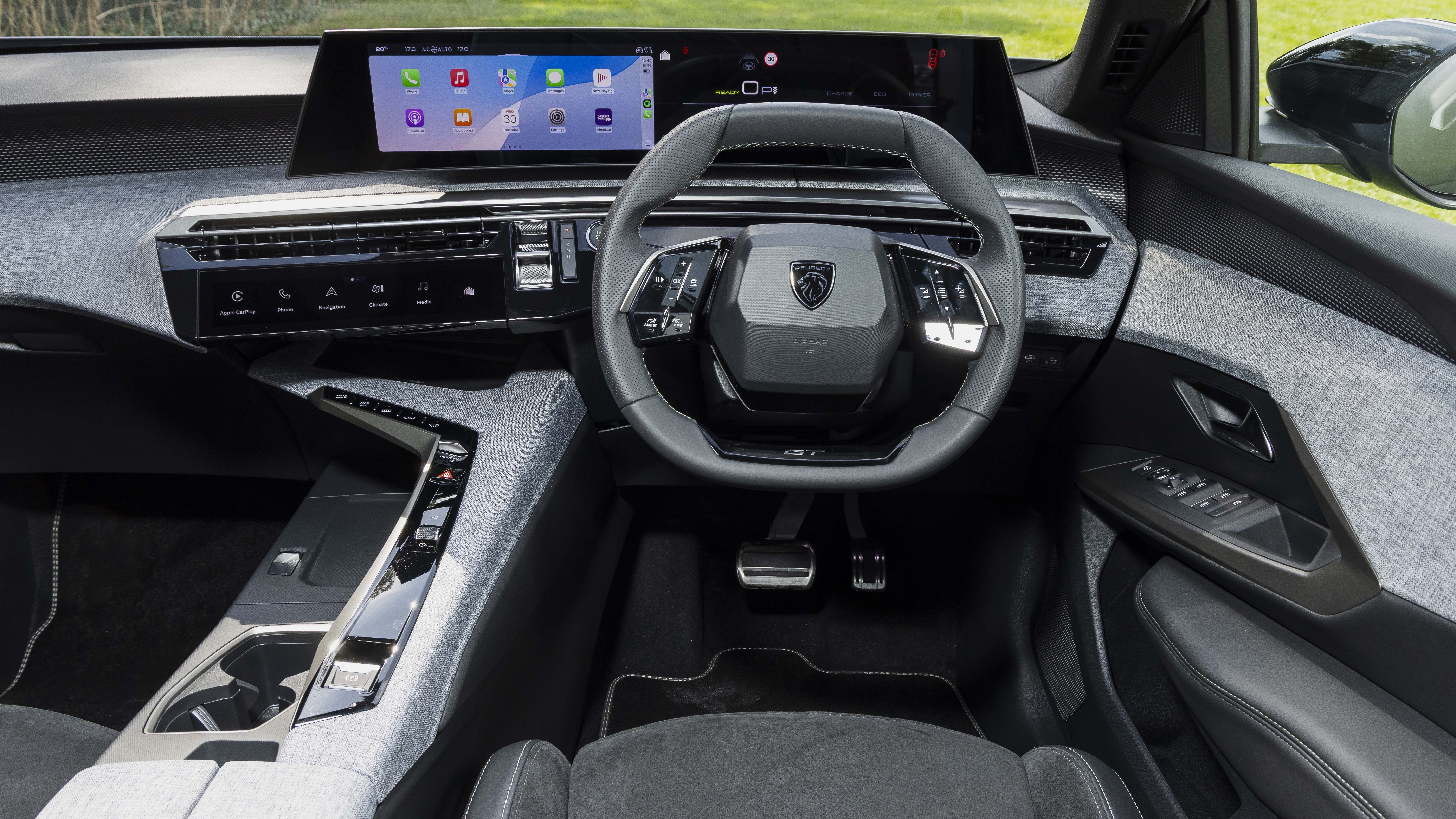
There’s assertive handling, thanks in part to the tiny steering wheel, which makes the car feel lithe and manoeuvrable around town. On the motorway it's a bit more highly strung until you’re used to the more sensitive inputs needed. Paddles behind the wheel allow you to switch between three levels of regen.
The suspension does a nice job of keeping the car in check, smoothing out bumps but not allowing too much body roll. We’d avoid the 20in wheels, even if they fill out the arches better – they allow just that bit more road noise into the cabin and affect the ride.
Well, no. But it’s more fun than it needs to be at lower speeds. The output of the motor has been well judged so you rarely get torque steer or rabid wheel spinning from the front, but as with many electric cars you’ll want to keep it in Eco mode to get as much range out of it as possible.
If you’re going for records, then the entry powertrain with its 211bhp/253lb ft will get to 62mph from rest in 9.7 seconds, while the marginally more powerful, bigger batteried version (228bhp/254lb ft) lops a tenth off for a 9.6-second run. Both have a 105mph top speed and a kerbweight around 2.2 tonnes, which is to be expected for an EV of this size.
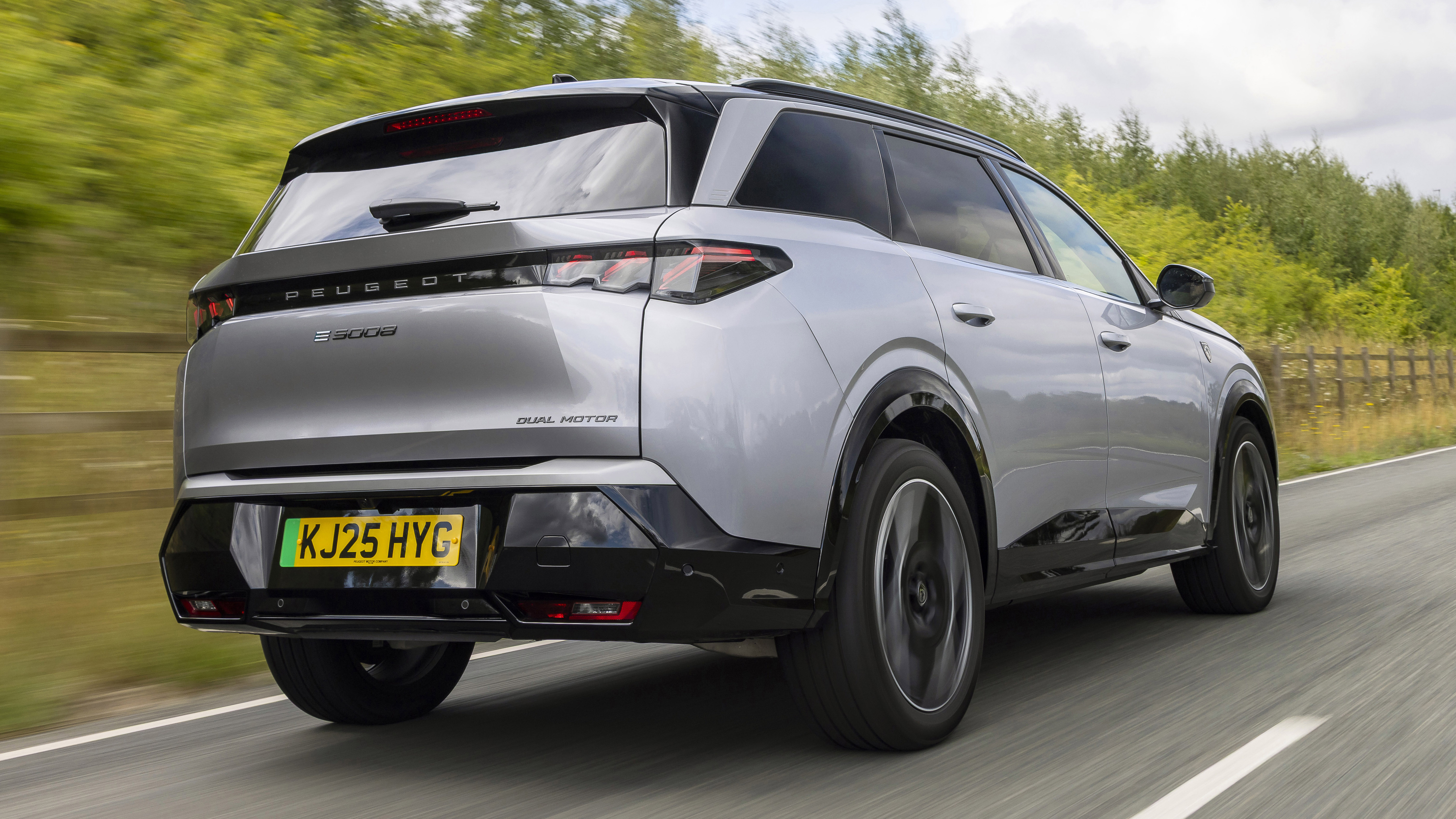
Ah yes, you have been paying attention. The dual motor version gets a combined output of 321bhp, with the rear motor contributing an extra 122lb ft of torque, which cuts the 0-62mph sprint time to 6.5 seconds, and gives it a top speed of 112mph.
Just not all the time. In Normal driving mode, the front motor and wheels are prioritised, with maximum power limited to 309bhp and 332lb ft. A graphic on the driver display shows where the power is being sent, with the rear motor only really kicking in under acceleration, and even then seemingly only on the odd occasion. Which rather defeats the point of having the extra motor at all.
So to reap any reward you’ll want to be in Sport or 4WD then. In Sport power is distributed 60/40 between the front and rear axles; in 4WD power is distributed evenly. It certainly feels quick and it grips gamely around any fast-flowing bends too, but then you remember that this is a seven-seat family bus and not, in fact, a 205 GTI (we wish) and start to wonder what's the point.
Because the hard truth is there’s seemingly little reason to get it over the single motor variant. Outright pace aside, there’s very little extra reward for upgrading to the quickest one – particularly given the range compromise it brings.
The 73kWh car is rated up to 310 miles and the 97kWh car up to 414 miles, both of which are entirely reasonable numbers. We drove the 73kWh car around for a week in slightly chilly weather and found that 240 miles was doable in careful mixed driving. Around 3.3mi/kWh, e-efficiency fans.
The dual motor version gets the same 73kWh battery, but manages a slightly decreased 289 miles of range, on account of the extra 100kg(ish) it weighs, and the resulting loss in efficiency calling on another motor brings. We averaged around 200 miles of range taking in a mix of town and motorway driving.
The e-5008 is equipped for 11kW three-phase AC chargers (this mostly matters for public chargers unless you’ve got very fancy domestic electrics – think 7kW otherwise) and will rapid charge on DC up to 160kW.
The bigger battery can sustain that for longer, so a 20–80 per cent juice will take 30 minutes on the 73kWh car but 27 minutes on the 97kWh car.
Thank you for subscribing to our newsletter. Look out for your regular round-up of news, reviews and offers in your inbox.
Get all the latest news, reviews and exclusives, direct to your inbox.