



PCOTY 2025
Top Gear
Dakaaarrrggghhh! Land Rover Defender Octa vs Ford Raptor T1+
The Defender Octa is about as serious as road legal off roaders get... can it stick with a full blown Dakar truck?
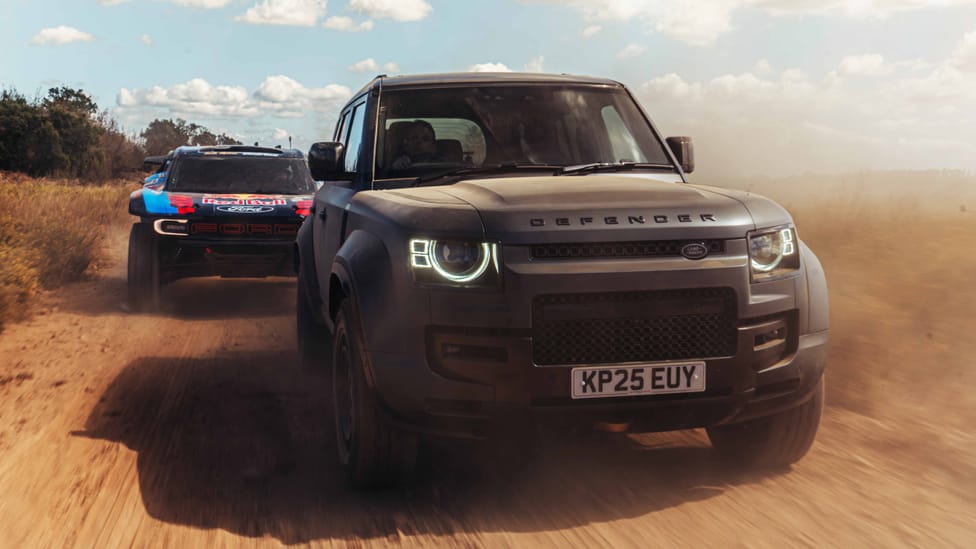
The OCTA is in its natural environment. Or at least the one it was designed for. Because this ain’t Chelsea, it’s Portimão’s rally track. And this Defender is taking to it in a way no other modern SUV would dare to.
It’s funny, isn’t it? Until now, no one has made an SUV specifically designed for fast off road use. Except the Americans. They get this stuff, they get that it’s fun to slap Fox shocks under an F150 and go play, but in Europe we get SUVs that attempt to mimic super saloons, or serious off roaders that are re-urbanised with V8s and 23s. For us the Defender Octa is something new, something different. Something a bit silly. A Defender, reoriented. It’s taken a step beyond the ubiquitous G63, because it’s been given not just a twin turbo V8, but a mission, a purpose.
Advertisement - Page continues below
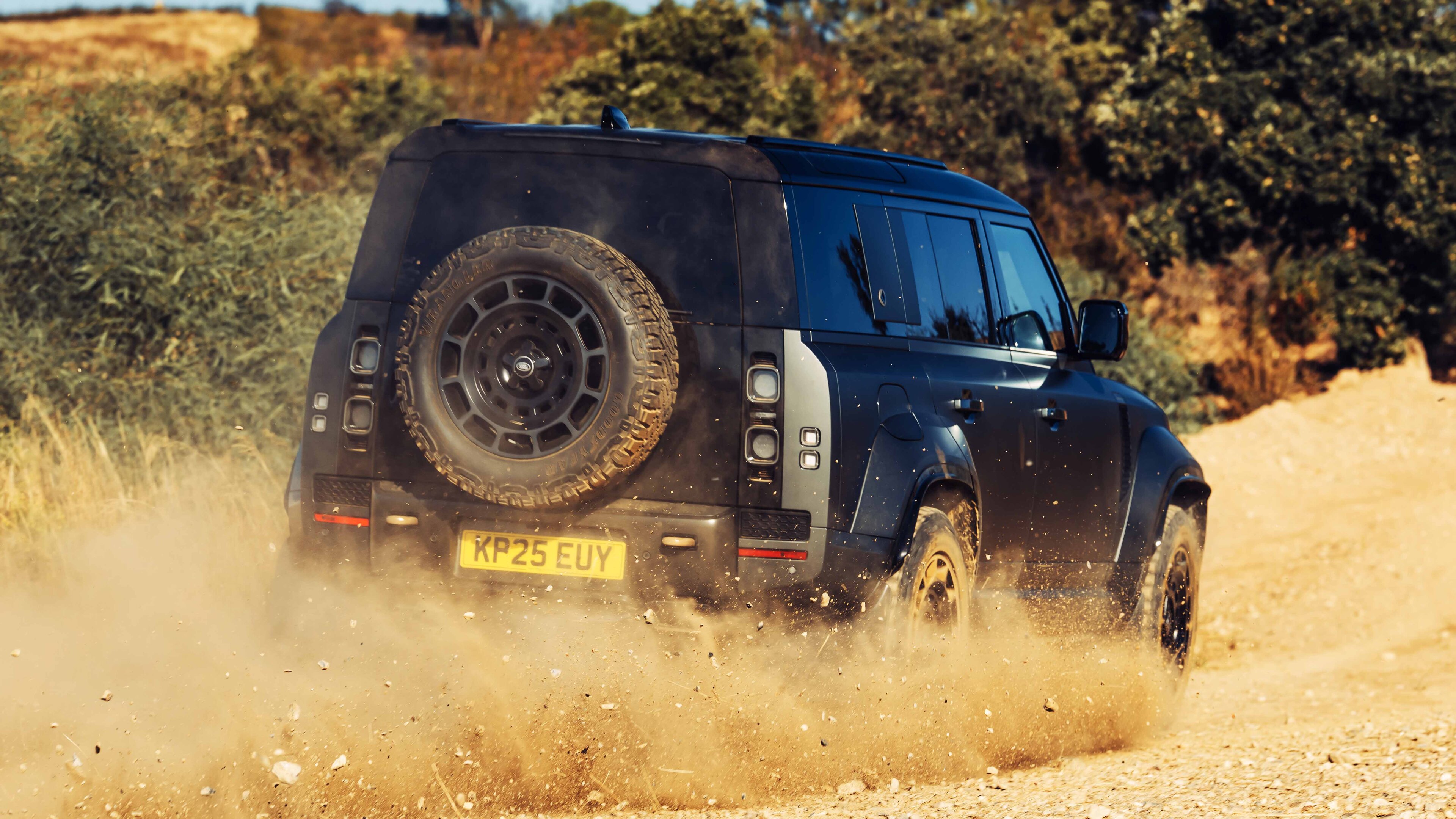
Go play. That about sums it up. This is not a prissy or precious car, but comes across as the kind of car that would wear battle scars proudly, were any owner bold enough to use their £145,300 investment that way. Today we are, and the Defender is storming along the routes and tracks that run up into the hillsides overlooking the circuit.
Photography: Mark Riccioni

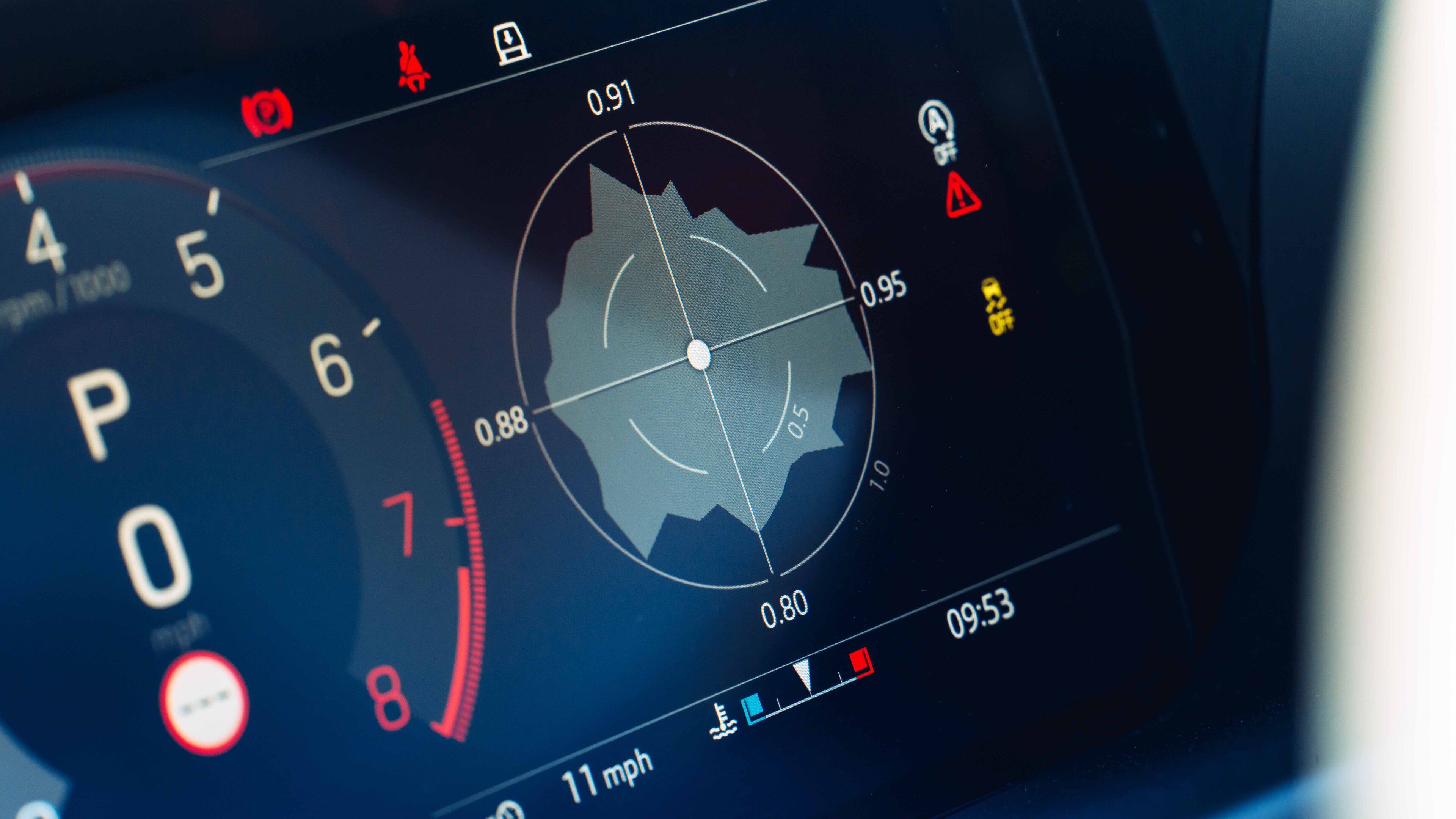
This is off roading as I love it – the fast charge, not the slow crawl – and the Octa is behaving like a 2.5-tonne rally car. It’ll Scandi flick into corners, then send rocks and stones scattering at the scenery and its own reinforced undersides as the 626bhp V8 gets to work. At times it pulls over 1g of lateral load through the more banked corners. That’s proper big boy grip.
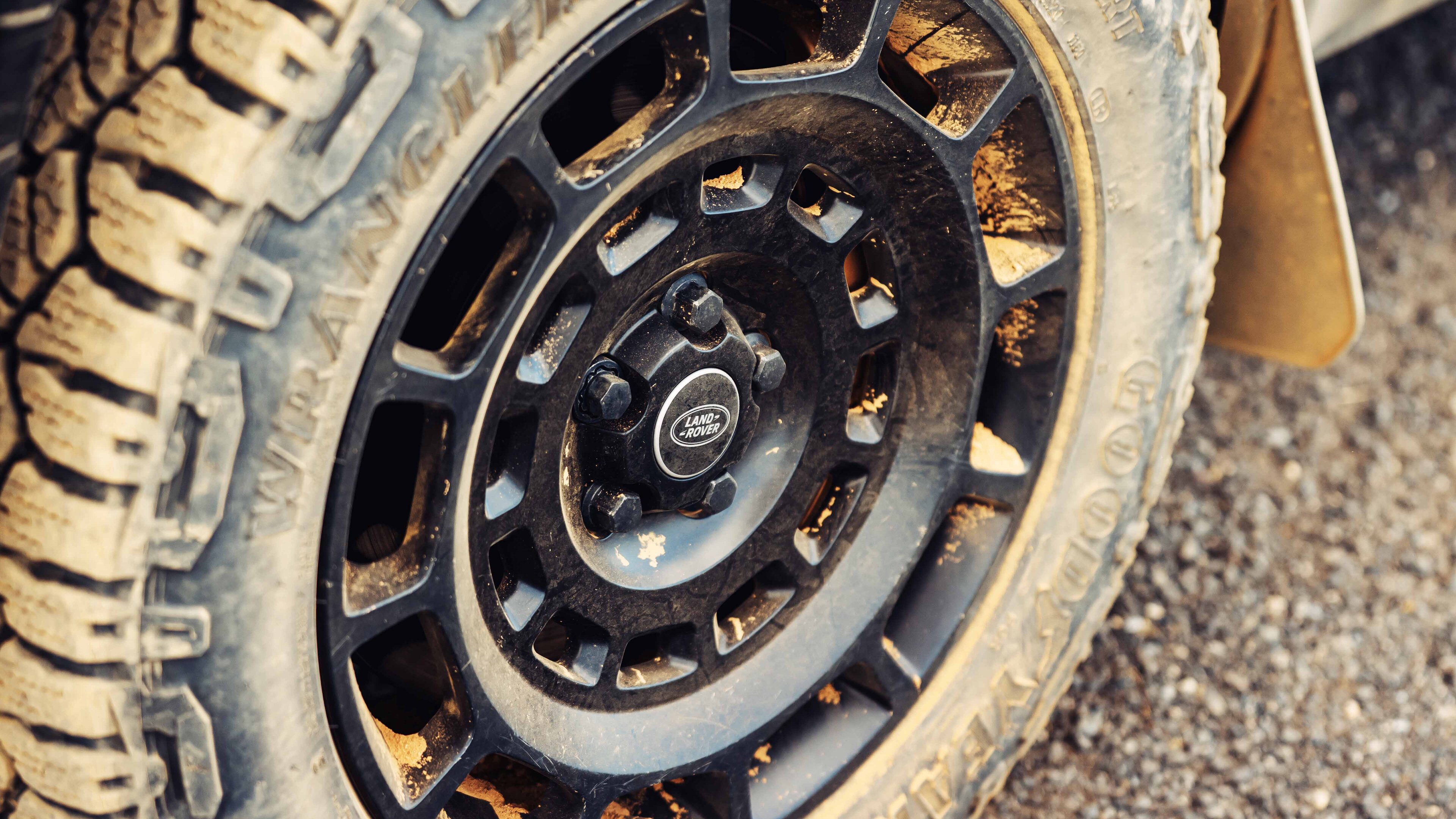
The suspension is the thing. This uses the same 6D hydraulically cross linked system that underpins the Range Rover Sport SV that failed to wow us at PCOTY last year. On track that had hopped and skipped around – too much tyre grip for the system to deal with. Here, wearing burly 20in Goodyear Wranglers, it’s a different story. It’s supple and composed, deals with the weight beautifully and best of all there’s no judder and shudder as it thunders along, because the suspension is so well insulated.
Advertisement - Page continues below
Look, there’s not much feel through the steering or controls, but driving it quickly breeds confidence because it comes across as a tough truck, bang up for the best kind of messing around. And next year Defender is intending to prove just how tough and robust this thing actually is by taking something closely related to the Dakar rally.
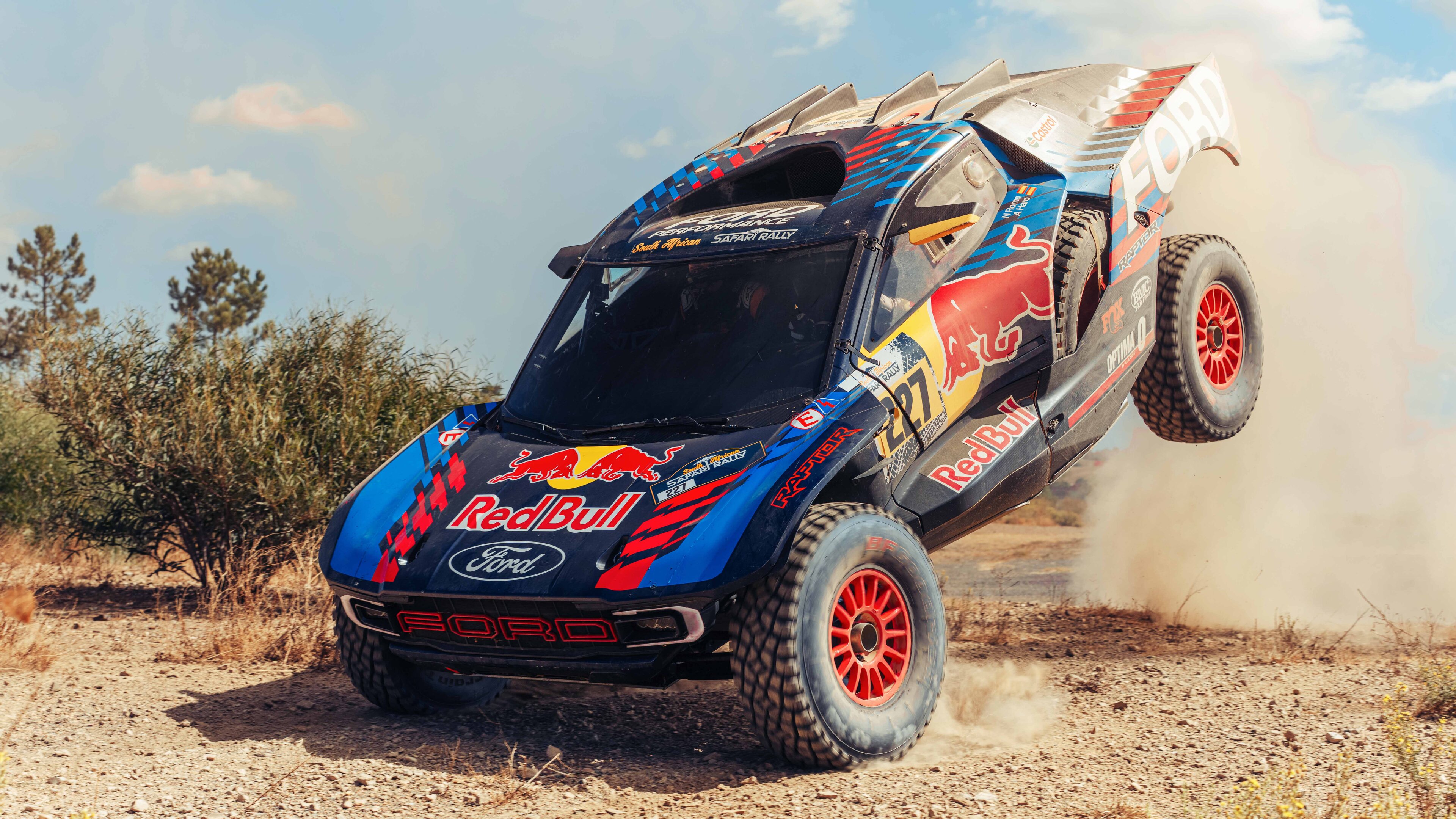
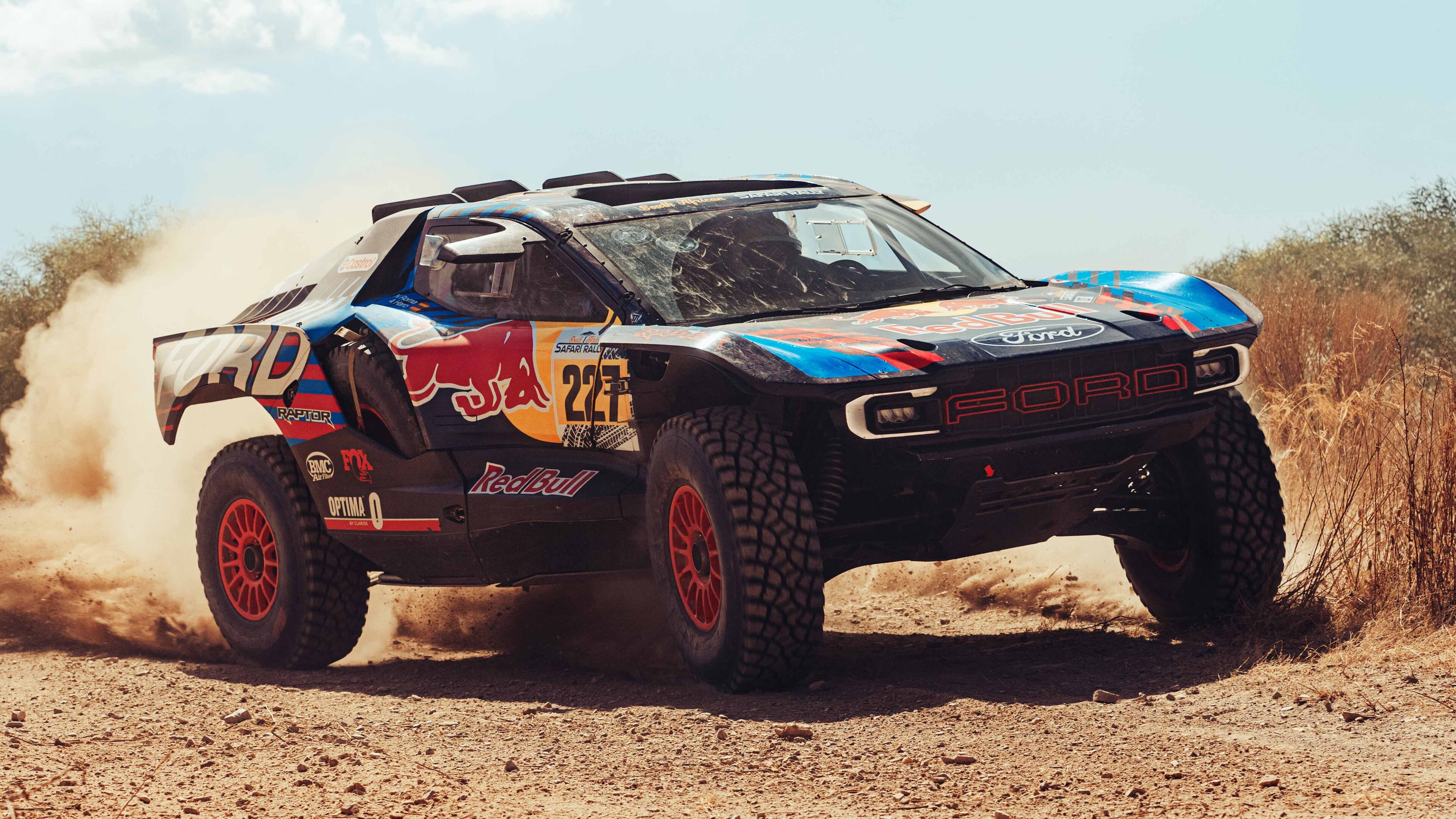
Where it’ll be roundly pounded by the complete nutjob that is the Ford Raptor T1+. But of course it will – the Raptor is a top line silhouette racer that is meant to somehow remind you of a pickup. The Defender D7XR will compete in the T2/Stock class. About time too. We’ve been banging on about the Defender needing to prove its reliability with some sort of extreme challenge, and come January 2026 in Saudi it will get the chance.
Top Gear
Newsletter
Thank you for subscribing to our newsletter. Look out for your regular round-up of news, reviews and offers in your inbox.
Get all the latest news, reviews and exclusives, direct to your inbox.
Success
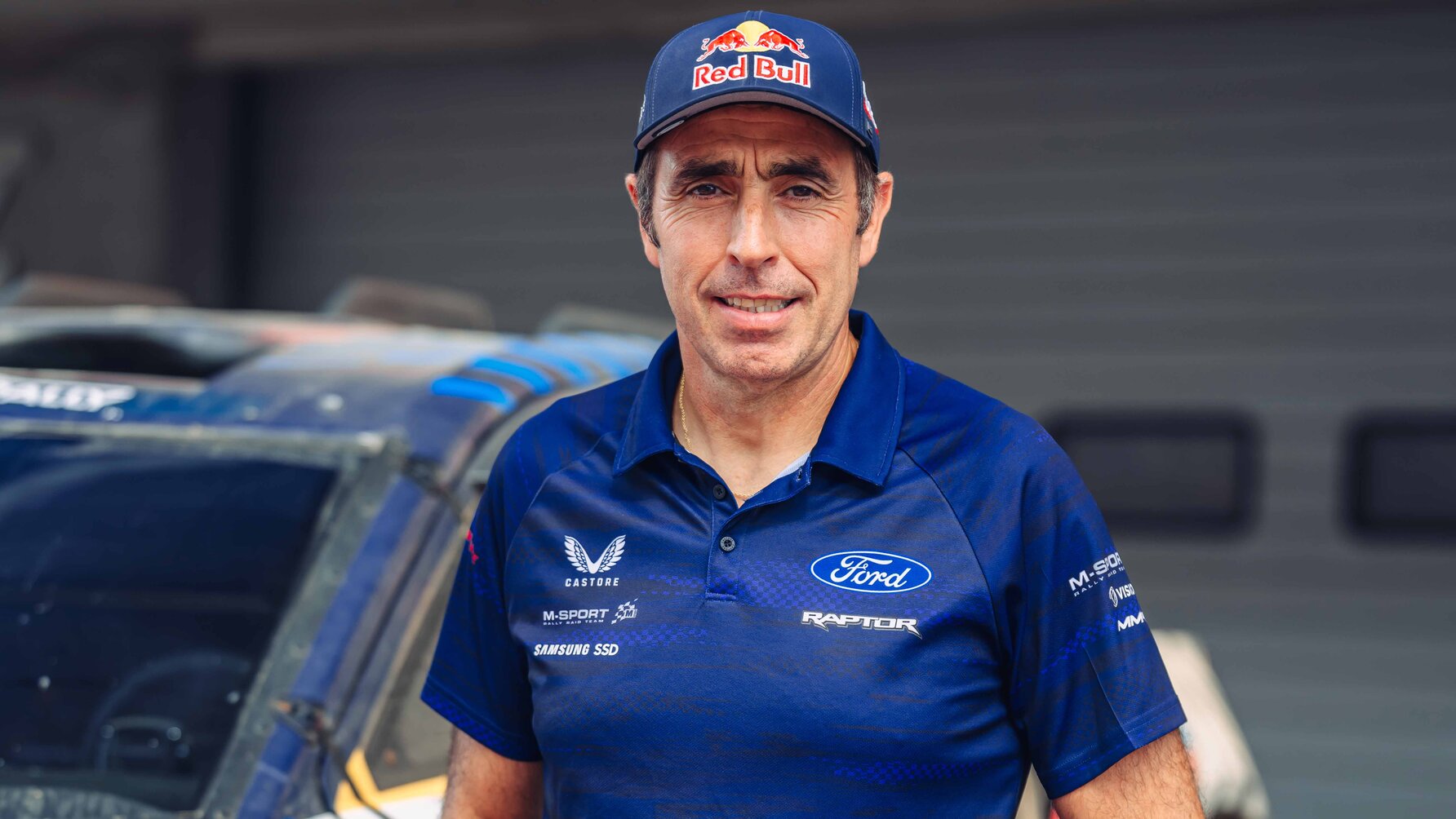
The Raptor has come with a Nani. Nani is a loon. What’s immediately apparent as we launch into the scenery (and, too late, I realise I’ve forgotten to connect the HANS device to my helmet) is that Nani doesn’t see tracks as you and I do. We see corridors, track limits created by bushes, trees, gullies and banks.
But Dakar doesn’t work like that, so nor does Nani. It’s navigational, you go where you please to get where you need to be as quickly and directly as possible. Which is how he now treats our rally stage. There’s a right hander coming up, but he’s turned left and now we’re careering across an off-camber slope because he’s spotted a shortcut that avoids the narrow slalom between a pair of trees. Vegetation scuffs under the Raptor’s armoured underside, doing no more than tickling its belly.
This is wide angle driving, the opposite of tunnel vision and Nani’s route radar is pinging in a way I can’t comprehend. Now he’s pointing head on at a near vertical bank that’s taller than the Raptor itself. Brace, brace, brace. We punch into it, the suspension appears not to notice, but our trajectory has fundamentally changed. All I can see is sky. Everything goes quiet. And a moment later all I can see is ground.
You know those Arctic foxes Attenborough narrated diving headfirst into the snow? Well, the Raptor does a commendable impression. I clench everything. And once again the suspension and 37in tyres soak up the impact of a six foot nosedive as easily as a Rolls does a speed bump.
Once I’ve refound my land legs I have a peer underneath. The twin damper arrangement at each corner has so many pipes, tubes and valves running around it you’d think you were looking at a steam engine. It’s ludicrous. But what it’s capable of is remarkable. I’ve been lucky enough to drive quite a few Dakar cars over the past decade, including the BRX Hunter and Audi’s high tech RS Q e-tron hybrid, but this does fundamentally shift things.
14 minutes 17 seconds
It feels faster, more agile, carries its mass more lightly. Comes across as more like a WRC car. Maybe not such a surprise when you learn it’s been engineered and developed by M-Sport, Ford’s long time rally partner. It’s the best thing ever to drive off road. Not least because of the outrageous noise it makes as it charges around. Those working in the pitlane claim they can’t hear the Revuelto belting past on the main straight due to the noise this thing’s making hundreds of metres away. A proper uncorked 5.0-litre Coyote V8 race engine put in a spaceframe chassis that you can point at anything and win.
The Octa was good out here, but the Raptor was born here. It’s all it’s ever known or will ever know. The cabin is tight, the controls purposefully light to reduce fatigue, but to drive it gives me a sense of utter bulletproof invincibility, a car born to take punishment.
As Nani said before I drove it, it needs to be driven hard, you need the weight moving around, because when you do that you barely need the steering to change direction, everything can be done with small movements, just setting up an angle of attack before nailing the throttle and letting the three locking diffs and permanent 4WD sort everything else out.
You don’t want too much angle, Nani tells me, as it’s when the tyre slides sideways it’s most likely to puncture. I drove Hyundai’s i20 WRC car here at Speed Week six years ago and there are marked similarities in the manners and behaviour of both. Only the scale has changed. Both experiences go into my drawer of special memories.
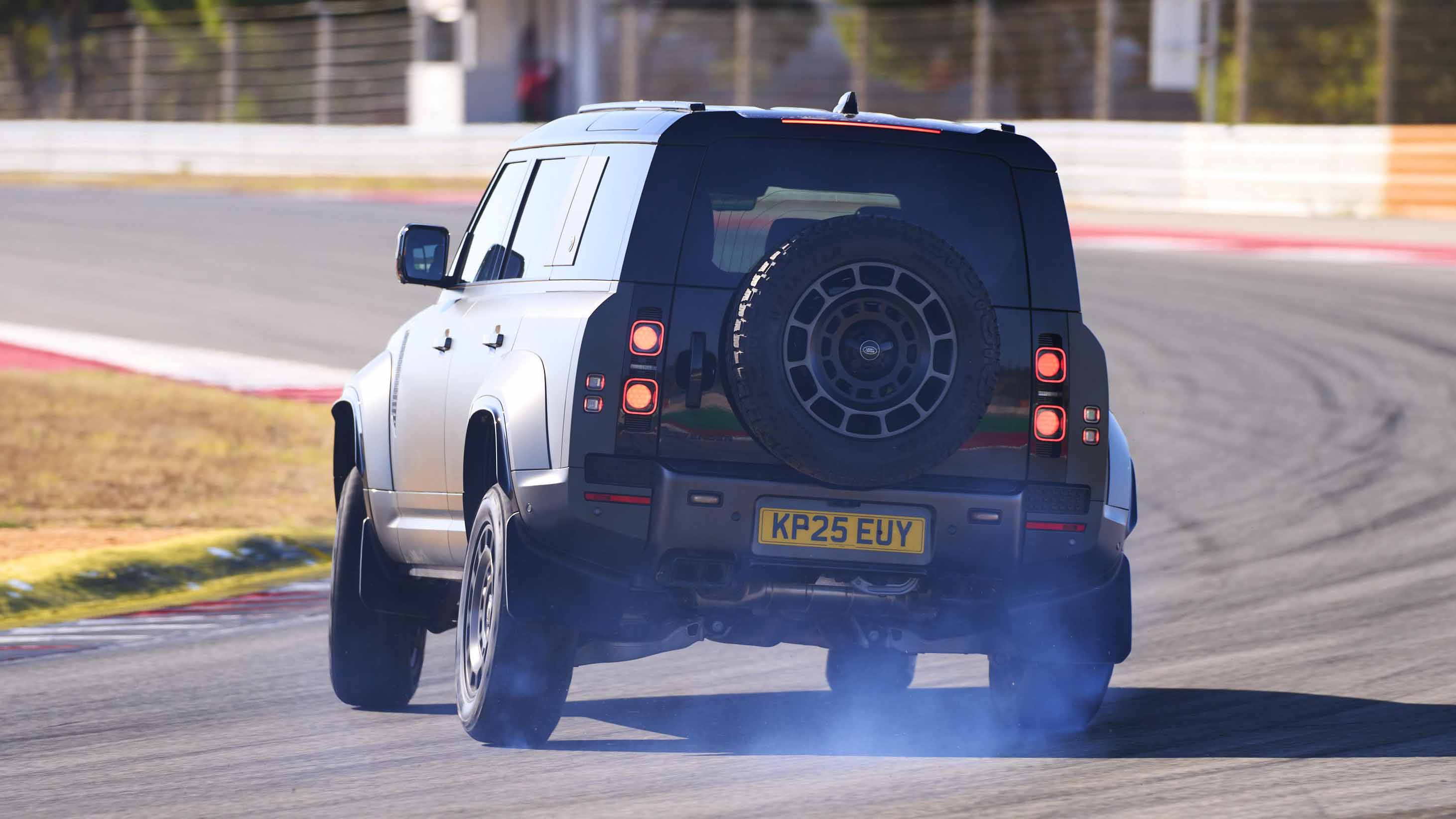
And just as we did with that, we took this on to the tarmac as well. Wouldn’t you? Just to see it out there alongside the belly scrapers and chin scratchers. It was suitably idiotic, the hydraulic handbrake meant it cut some amazing shapes, but we realised that it mainly turns 520 litres of fuel into noise rather than forward progress – a constricted 355bhp (and Dakar limited 112mph max) is fine in the rough, dull when the Octa has nigh on double the power. Not that the burly Brit feels 4.0secs to 62mph fast.
If Land Rover can coax a car or two to the end of the Dakar next year that will be a victory in itself
Or particularly happy on a hard track. We have found the Octa’s unhappy place, because it doesn’t really know what to do. You can turn in on the brakes and it will four wheel drift past the apex, but otherwise it understeers scrappily around.
Obviously fitting road focused tyres will improve things dramatically, but let’s face it, the Octa isn’t designed to be a hard surface car. We know already that it is a great (if extremely thirsty) daily driver, and there’s more than enough bandwidth between quiet cruiser and cross country charger to keep us happy – far rather this breadth of capability than an Urus or Cayenne Turbo.
Ideally, we’d like it to have a bit more edge – particularly the engine which, even when not being completely drowned out by the Raptor, is too muffled and quiet. First job for most owners, I expect. I don’t know where you’d use the Octa in the UK – we just don’t have the wide open playgrounds that America specialises in – and I have a distressing sense the Octa will be used in exactly the same way as any other Defender, only more obnoxiously. It’s a shame, as there’s nothing else really like it.
Land Rover has found a niche and plugged it very well. If Land Rover can coax a car or two to the end of the Dakar next year that will be a victory in itself. The Raptor? That’ll be up the sharp end of the running, making enough noise to set the Saudi sand trembling.
Nani knows best
Nani Roma is a Dakar veteran. He’s been competing in the world’s toughest, most gruelling endurance race for 30 years, and has won it on both two wheels and four. Above all, Dakar needs experience – not just in the driving, but in the car development too.
Before signing for Ford last year, Nani drove for Prodrive in the BRX Hunter. Yeah, the two do have a strong suggestion of similarity (the Hunter has now morphed into the Dacia Sandrider), both front mid-engined with a giant 500-litre fuel tank behind the seats and a pair of spare wheels nestled on the flanks. Imitation is clearly the sincerest form of flattery where the Dakar is concerned.
“But compared to the Hunter, this is much more advanced,” comments Nani. “We have really worked on siting the occupants as centrally as possible, so they’re not exposed to the pitch, dive and roll. This means it’s less tiring to drive so we can go harder, for longer.”