



20
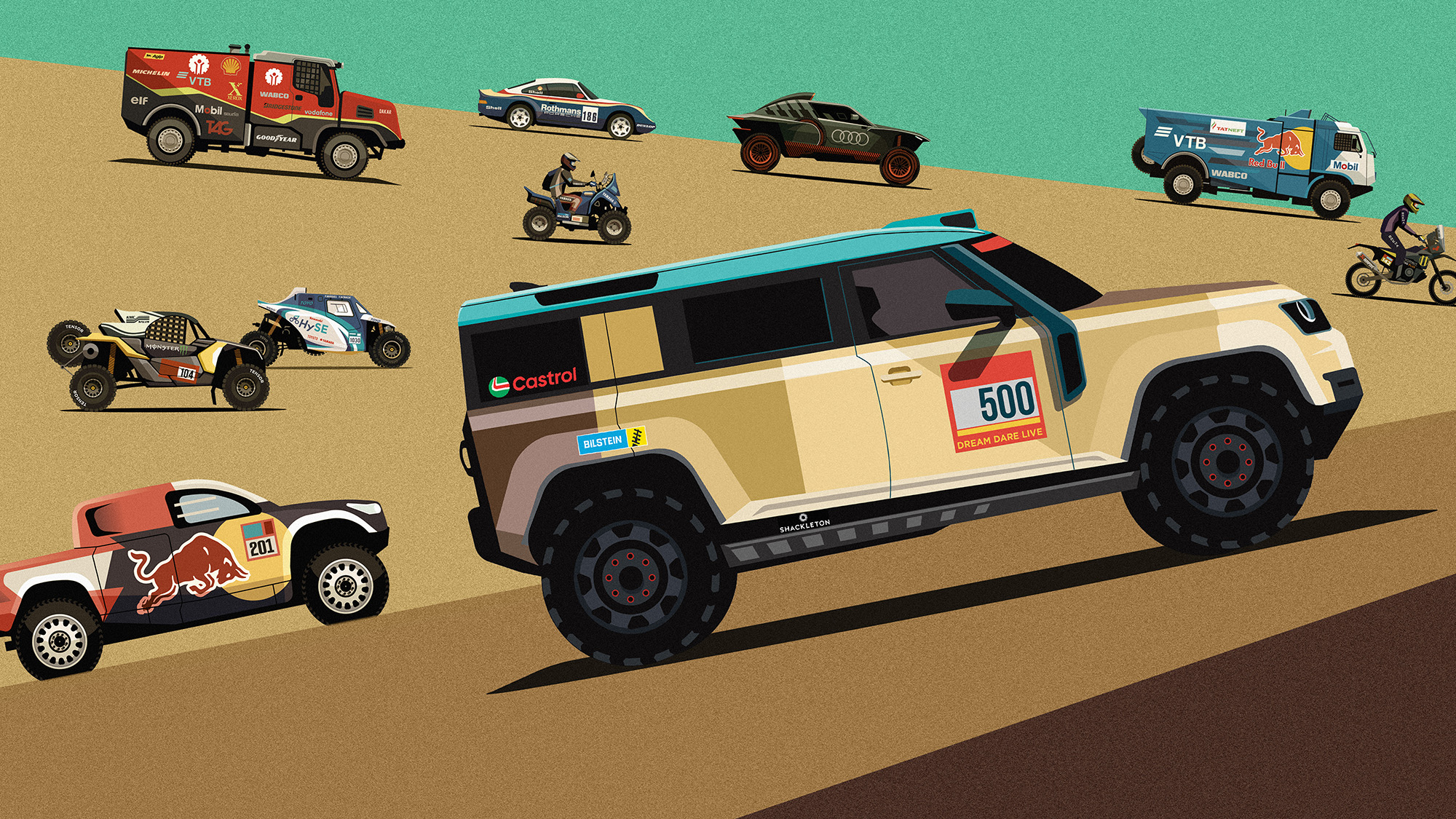
The Defender Dakar D7X-R is just one piece of the Dakar puzzle. Time to take a look at the mega variety of vehicles in this year’s rally
January 2026 and it’s that time again; the Dakar Rally is back. And this time Defender is joining the circus in the sand. The world’s most famous off-road race is once again set to attack the gnarliest bits of Saudi Arabia to see who has the ultimate driving skill set, the hardiest car on the planet and the sense of direction of a genetically-enhanced homing pigeon. And as ever, Dakar isn’t just cars and bikes. There’s a whole motorsport family tree out there bouncing off the jaggedy bits of Saudi. From purpose-built rally raiders in the Ultimate category to relatively showroom metal in the Stock class, which Defender is hoping for glory. As ever, it’s not a flat out race – rather it’s all about managing your equipment against the brutal terrain. The geography is the anvil on which you must try not to break your kit. Or yourself.
So just what kind of stuff is in this year’s rally? Take a look at our handy guide…
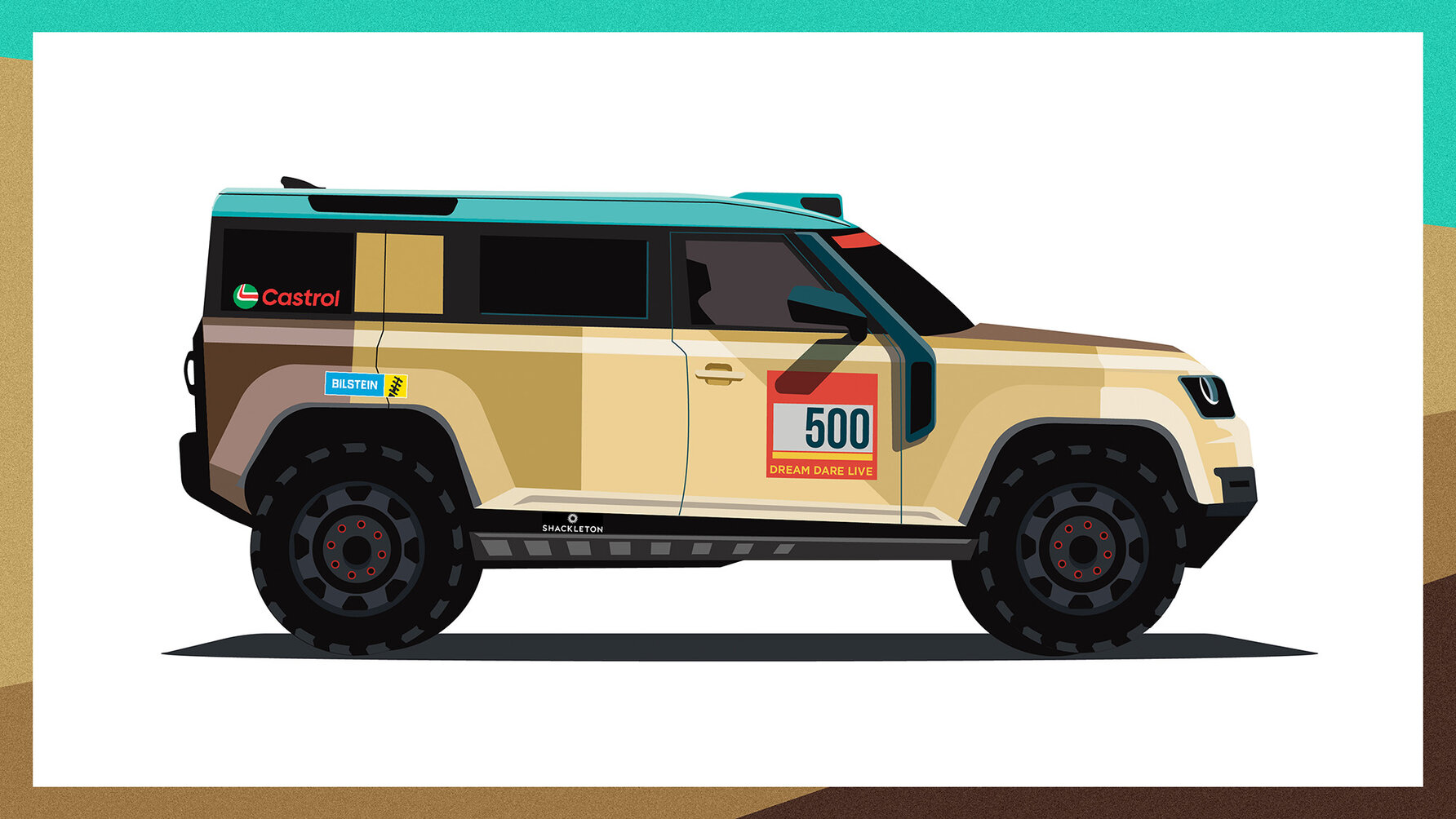
Stock (previously T2)
One of the most exciting classes in the Dakar if you want to actually recognise the vehicles taking part, the new ‘Stock’ class is for cars based on production vehicles. And that means properly stock; the competitors must have the same engine, driveline and gearbox, and the same bodywork and chassis as any car pulled from the production line. Take the Defender Dakar D7X-R, for instance. It’s the first-ever entry from Defender, entirely based on a Defender OCTA (D7X) and most of the modifications are safety-based (rollcage, spares, medical). The only real modifications are a 500-litre fuel cell (necessary for the 500+ mile stages) and some doubled-up Bilstein damping - necessary for both the terrain and driving around with 500+ kilos of fuel. Bodywork mods are limited to stronger bumpers, marginally widened arches and bigger tyres (of which is carries three spares). But the reason it looks very much like a normal Defender 100 is because… it pretty much is. In some ways, the Stock Class feels like the most pure of the Dakar classes - stuff you recognise taking on the biggest challenge. In fact, the Defender entry is the one to watch; exciting enough to convince ‘Mr.Dakar’ Stephane Peterhansel to return to the Dakar to drive - and that’s worth the price of admission in itself; he’s won the Dakar 14 times on both bikes and in cars.

Ultimate (T1+)
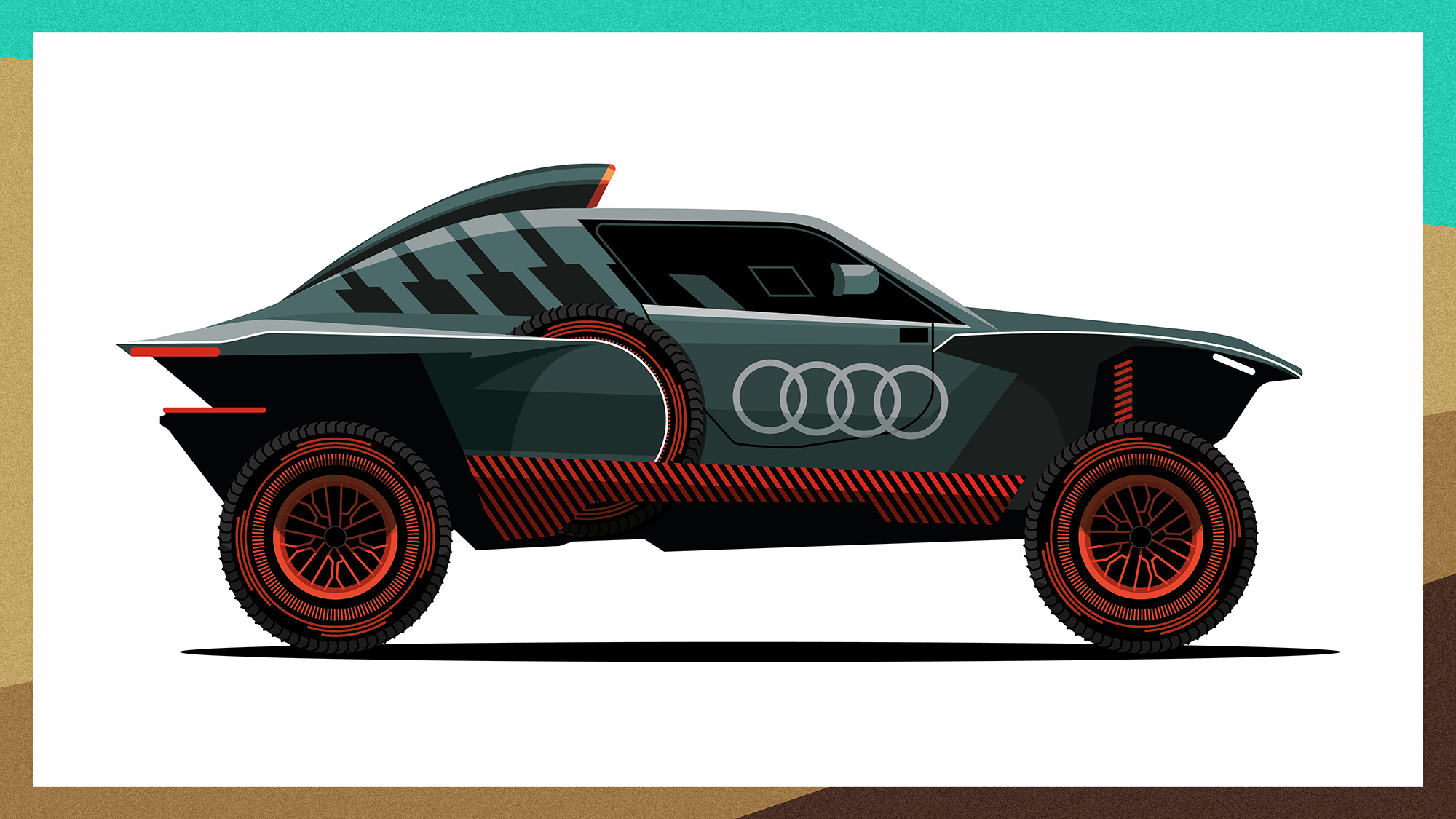
The fastest of the Dakar contenders, Ultimate or T1+ vehicles are bespoke tube-chassied monsters built specifically for events like the Dakar. Ford returns with the Raptor T1+ piloted by Carlos Sainz, Romain Dumas and Nani Roma, and the Dacia SandRiders team arrives headed up by five-time Dakar winner Nasser Al-Attiyah and nine-time WRC champion Sébastien Loeb. Toyota Gazoo Racing is entered with the Hilux T1+, as is X-Raid and Ebro Audax Motorsport, plus a few others. These maddest of mad things aren’t just no-holds-barred though: they have to have two seats (driver and co-driver/navigator), 4x4 capability, a minimum weight of 2,010kg, a width of 2.3 meters, and a max of 350 mm of suspension travel. Max power is managed with EoT rules (Equivalence of Technology), but maxes out at 400bhp. So that means the 5.0-litre V8 in the Raptor or the 3.5-litre biturbo in the Hilux are in - relatively - low states of tune. Good for reliability, which is Point One in the ‘trying to finish the Dakar’ guidelines.

Challenger/T3 and SSV
The Challenger class consists of lightweight prototype cross-country buggies - basically a stepping stone for future T1+ competitors. And where Defender’s Rokas Baciuška cut his winning teeth. These feral little machines are basically a step-up from the SSV side-by-sides, but work out much cheaper to run than a full-on T1+ set-up. They’re also speed-limited compared to the big brothers - they top out at 84mph where the bigger cars manage 105mph flat out. If that doesn’t sound particularly fast, remember that this is pretty much all off-road. They’ve got impressive suspension travel and just enough flimsy bodywork for the pilots to feel like they’re in a car and not a motorcycle. But it’s a close-run thing. The Challenger class is also related to SSV (previously T4). As the name suggests, the SSV (side-by-side vehicles) are little lightweight off-roaders based on production vehicles. They’re well-modified, but distinct from the purpose-built Challengers - think Can-Am Mavericks or XYZ Yamahas. Again, it’s a feeder series into Challenger, with rising stars gaining valuable experience on the Dakar before they progress to the faster classes.
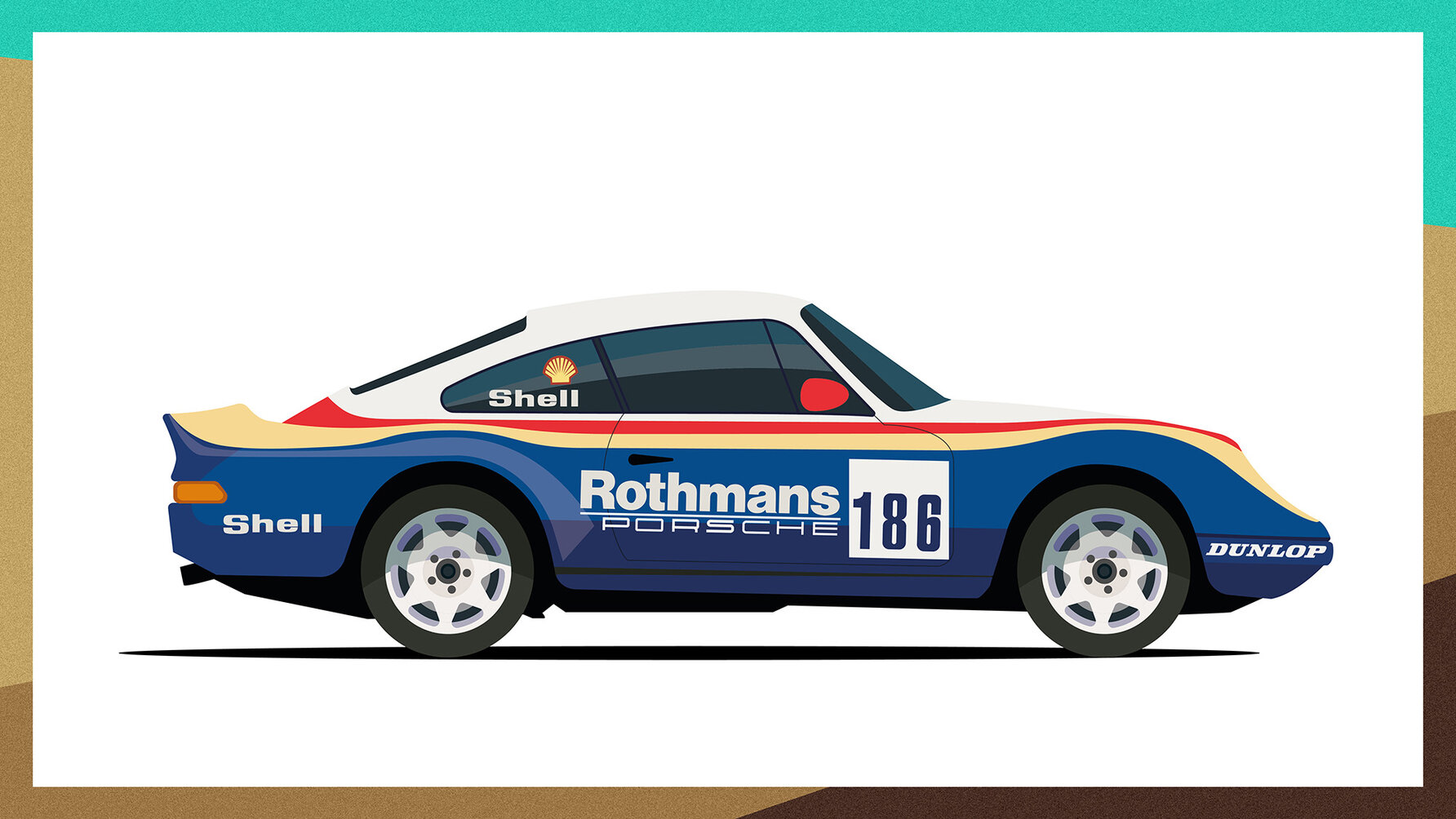
Classic Dakar
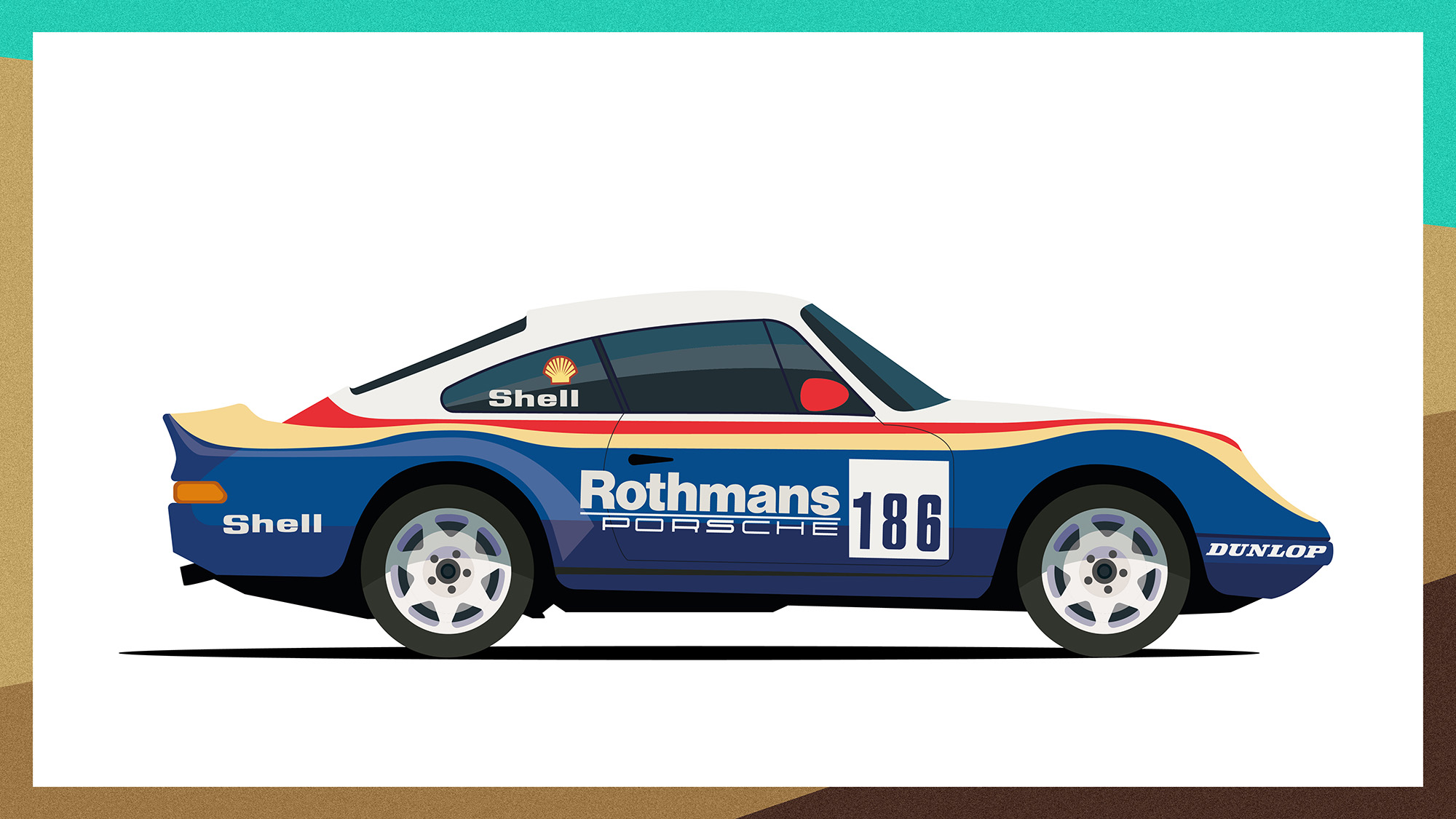
One of the best-looking classes at the Dakar - reserved for retro heroes from ages past. Basically, there are different categories based on age for both cars and trucks in 2026: Period A (before 2006), Period B (1986-1996), and Period C (1997-2005). The Classic category is a regularity rally, so that means matching a specified or bracket time rather than just going all-out to set the fastest time across the course. The closer you are to your time or distance covered, the less penalties you accrue. Less penalties equals a better score and more champagne at the end. If you think that sounds easier, then remember that these are older vehicles which tend to be a little more frail, the average speeds are still not for the weak and the challenge is even more stressful in ’26 with a new record for total special stage distance of 4,500 kilometres. That’s just under 2,800 miles of racing in a vehicle that might be 40+ years old - so the equivalent forcing your grandad (in car terms) to do an ultramarathon on dodgy knees.
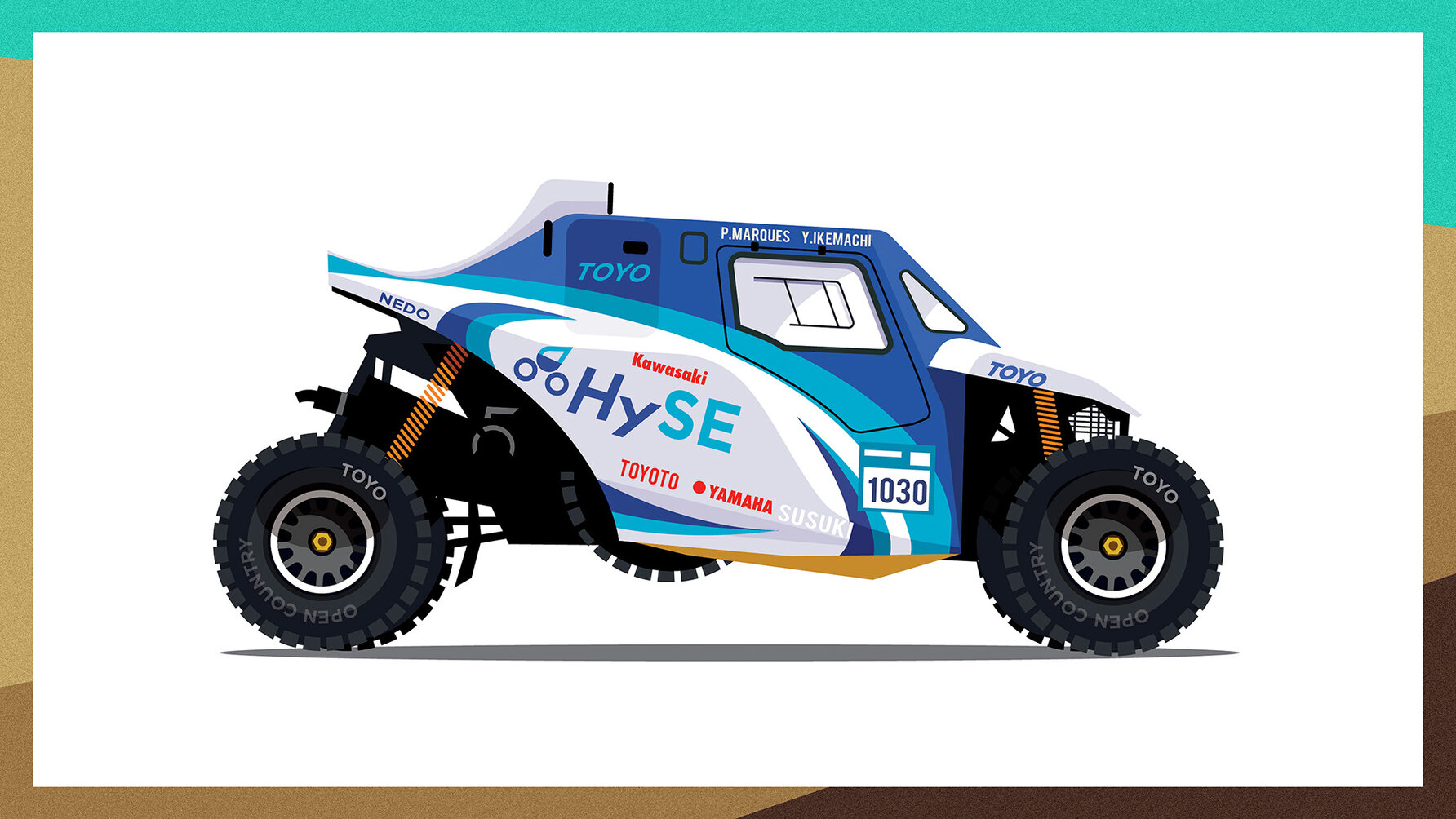
Mission 1000
The rolling desert laboratory of the Dakar. Mission 1000 is basically where manufacturers test their new eco and bleeding-edge technologies to see if they can stand being abused in the desert. So there are electric cars, bikes and hydrogen-powered vehicles tackling distances more suited to their needs. Essentially, these are the wheeled experiments that will likely form the basis for future rally raids, testing, evaluating and validating the new tech to see what works and what… explodes. There are all sorts of different rules for the Mission 1000 stuff, from the ability to do battery hot-swaps, to a requirement for the deployment of launch control (for extra points). In the 2026 race, there’s even a ‘fan boost’ element just like Formula E, but despite all the chintz, it’s probably one of the harshest ways to test your fragile prototype you could ever cook. Every piston-powered car in the Dakar is regulated to use low-carbon superfuels - but these are the vehicles looking past burning trees to give us our motorsport fix.
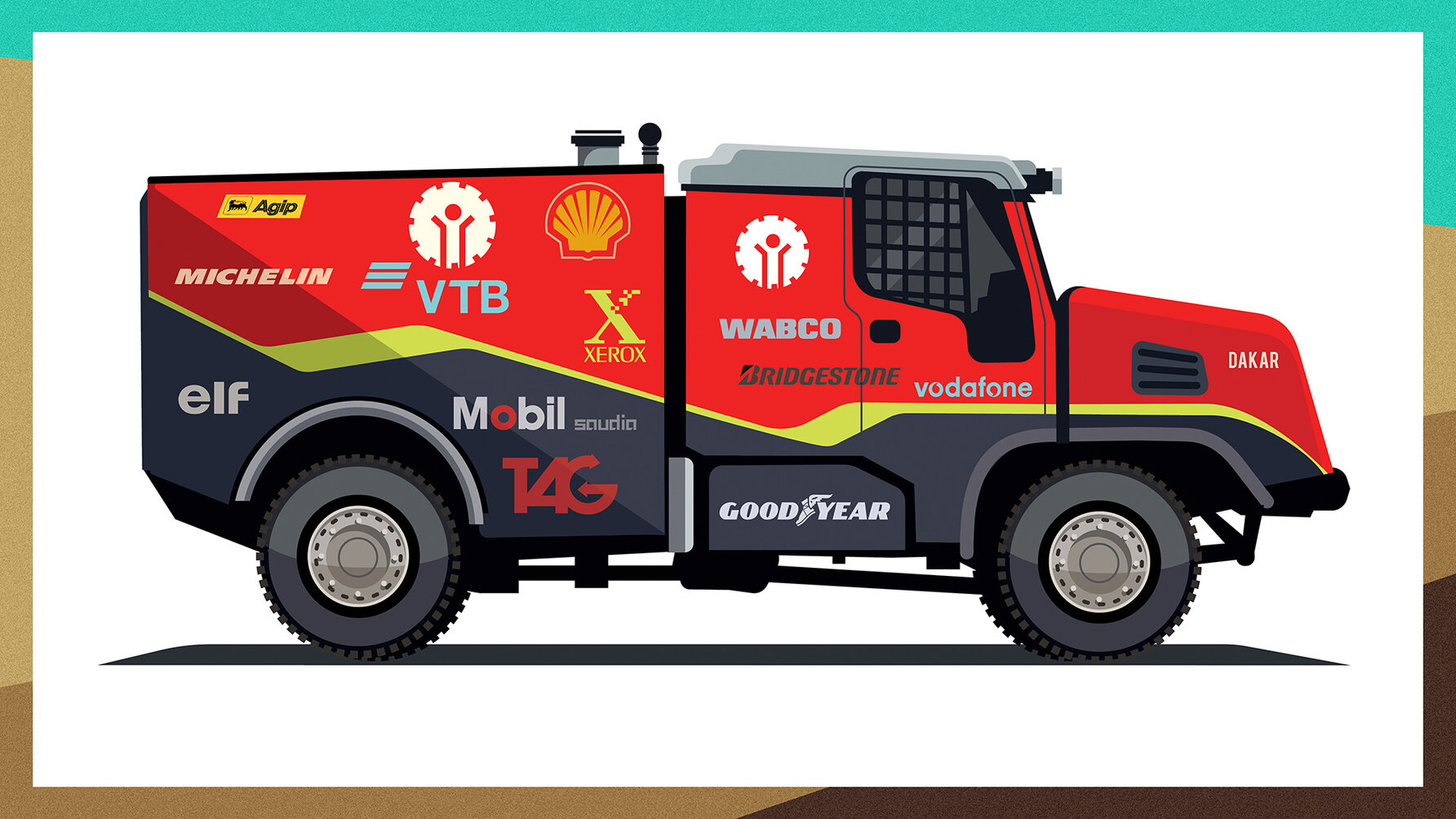
Trucks
The truck class is, as the name suggests, for the heavy duty boys and girls. They actually started out as the support vehicles for the cars and bikes in the late 1970s, but once the drivers realised there was an …uh… ‘informal’ competition to get to the bivouac/garage area first, it all got a bit out of hand and a new category was born. The trucks, in some ways, are even more spectacular than the cars - and some of the most famous moments have been the megatonne monsters outpacing the rally cars. The master? Jan de Rooy, who started playing with the format in a very experimental manner, ending up with a twin-engined, 10-tonne racing DAF block of flats with some 1,200bhp and four-wheel drive. That’s what 23.2-litres total displacement will do for you. The most successful truck team in the Dakar has previously been Russian Kamaz - having won 19 times as of 2022 - but as yet they’re unconfirmed for the 2026 start.

Bikes
Quite obviously the most taxing of the classes in any Dakar is that of the bikes and quads; 118 of the most sinewy, 1000-yard stare motorcyclists are taking part this year, and it’s hard not to salute them on their 450cc machines. Utterly exposed, fast and tippy, they’ve got their solo work cut out for them. Obviously there are issues here with protection if you crash, exposure even if you don’t and the general lack of ability to carry much in the way of spares or kit. The elite compete in Rally GP, with full factory backing from the likes of Honda and KTM, with successful previous winners people like Daniel Sanders, Luciano Benavides, Edgar Canet, Poole lad Sam Sunderland and Aussie Toby Price (not as household-namey as the car stuff), and there are also categories for women, juniors and semi-old people (veterans). Rally 2 is the mainstay for people who don’t have the dollars for a full race team but are tough enough to get through the course, and Rally3 is for people operating on modified factory bikes rather than bespoke rally-raid machines. There are also three classes-within-classes to distinguish between, too. Legend for elite riders, Rookie for newbies and Original (Malle Moto) who compete the whole thing without any assistance in honour of the original rally spec. Side note on those ‘original’ riders: on the Dakar in 2026 there are two ‘marathon’ two-day stages, where all competitors must operate for 48 hours without any outside assistance. But the one rather lovely rule remains: solo bike competitors can work on each other’s bikes; a rule invented to help more people actually complete the event.
Thank you for subscribing to our newsletter. Look out for your regular round-up of news, reviews and offers in your inbox.
Get all the latest news, reviews and exclusives, direct to your inbox.
