



20
The D7X-R is a beast based on a standard Octa. But it’s had some tweaks to make it race-ready
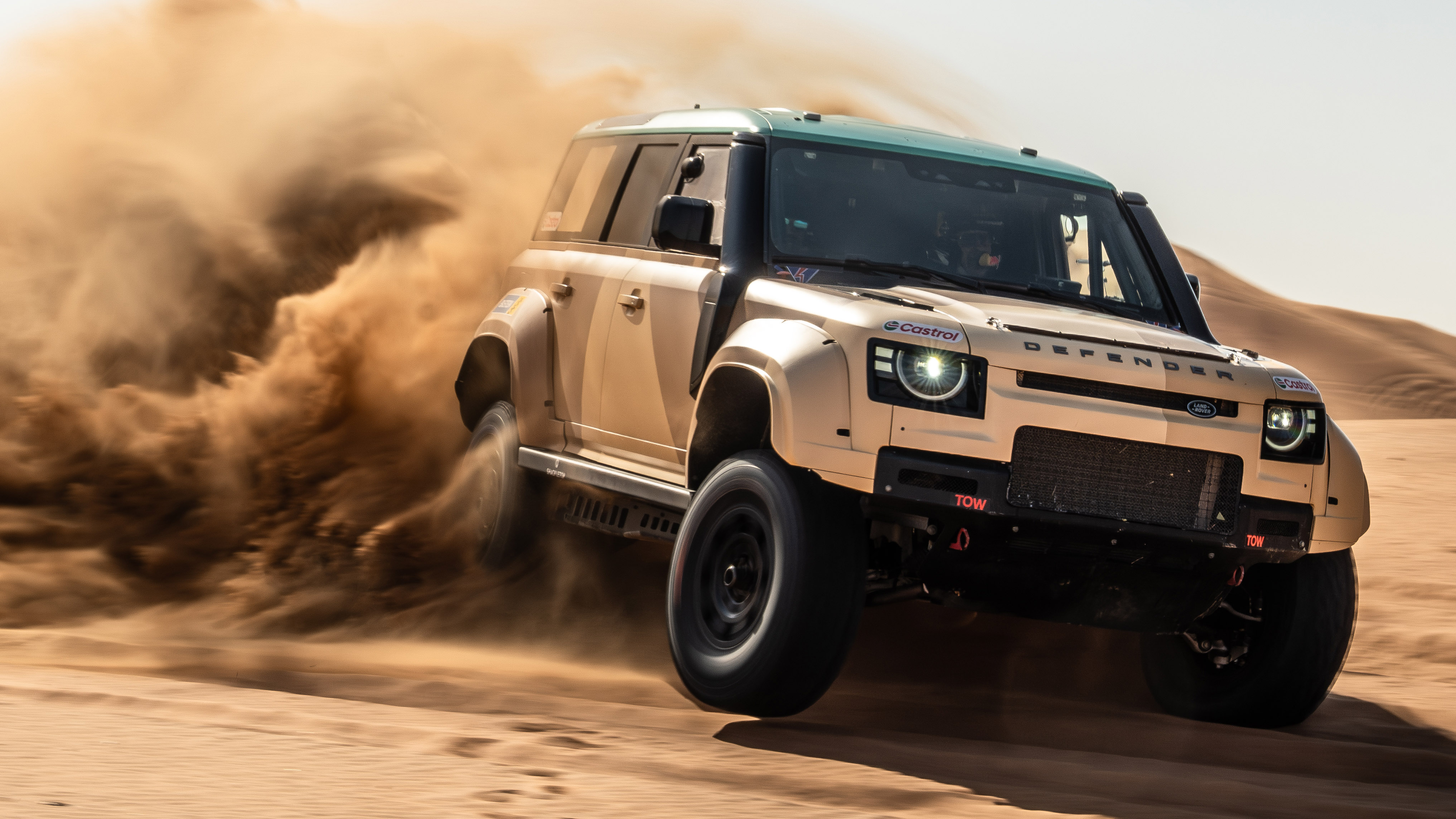
Want to know why the new Dakar Rally ready Defender D7X-R looks so much like a standard Defender? Because it basically is. The rules for the 2026 World Rally-Raid Championship (W2RC) ‘Stock’ category in which the D7X-R is due to compete are pretty stringent; vehicles need to be production class and have the same unmodified bodyshell, engine and drivetrain - no unrecognisable tube-frame ‘prototypes’ with a Defender grille taped to the front. Luckily, there's already a Defender that’s semi-rally hardened as standard; step forward the Defender OCTA (the D7X). And while the R is essentially ‘just’ a Defender 110 - it does have a few rally-specific upgrades. Let us be your guide.

The D7X-R has the same suspension mountings as the OCTA (as per the regulations), but with added rally brawn from technical partner Bilstein - the same company that supplies the production cars. The Dakar upgrade consists of single coilover suspension at the front and parallel twin dampers at the rear - built to cope with both the relentless pounding the desert delivers, but also the weight of the 550-litre fuel tank either full or empty. And it makes a difference; that’s well over half a tonne of fuel at the start of the longest Dakar stages.

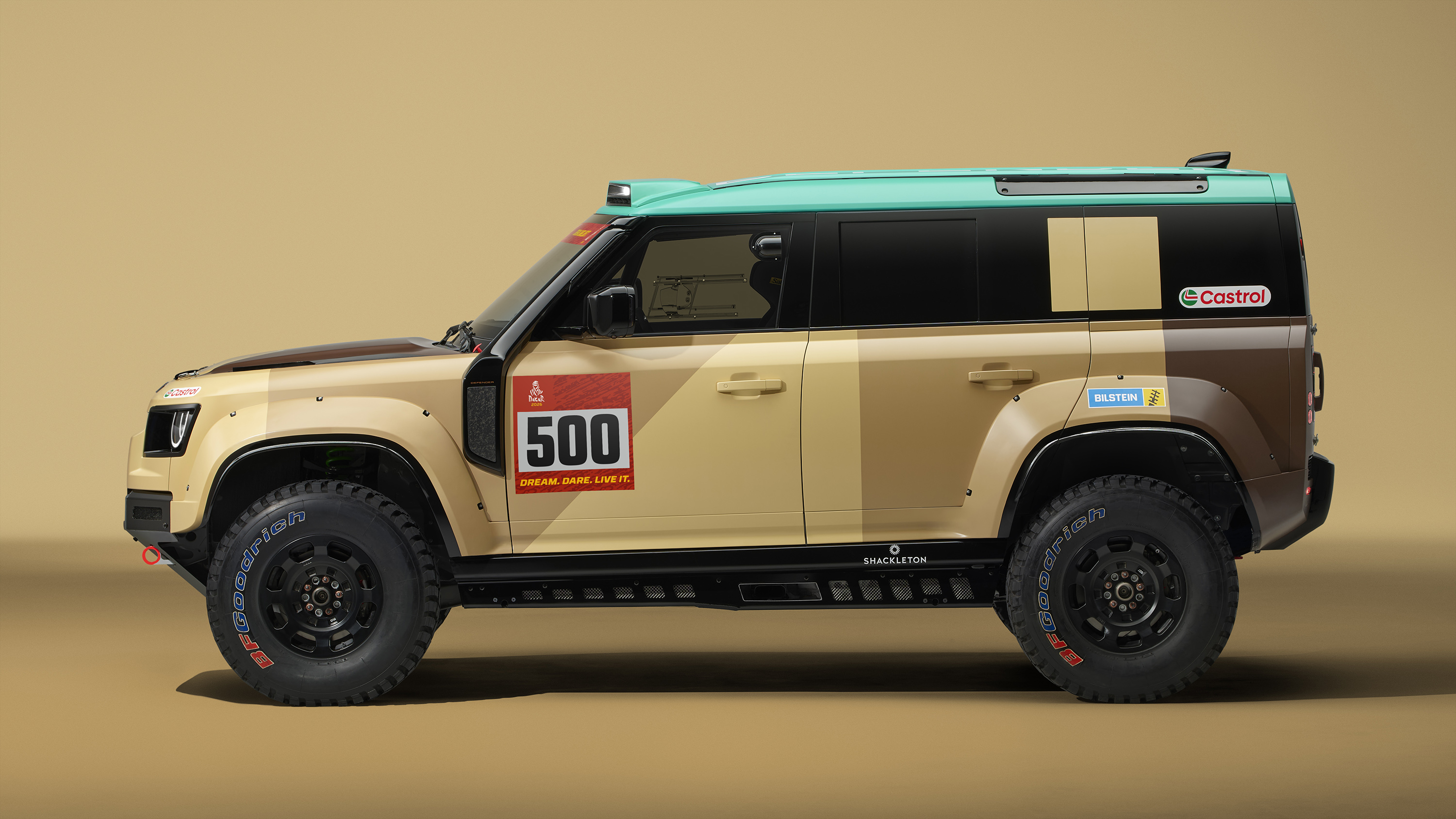
The D7X-R’s door panels have been trimmed and the sill width broadened to shroud extra underbody protection - designed to take the kinds of hits from geography that would shatter most cars after a few extra-rough miles. It’s not quite bombproof - but pretty close. As for the way it looks, it’s pure Defender. The same wheelbase as a standard car but a bit taller and wider thanks to the beefier suspension, bigger 35-inch tyres and a slightly wider track for extra stability. It’s also got slightly different bumpers front and rear for better approach and departure angles - stuff that really matters when you’re surfing dunes in the desert.

Strapped into the back of the Dakar Defender is a swimming pool-sized fuel cell - 550-litres of sustainable high octane, to be exact. That equates to some 120 imperial gallons, which, if this were a standard 4.4-litre V8 Defender OCTA it might take you… two and a half thousand miles. During the Dakar, things are a bit more energetic, so you’re looking at a quarter of that - but still necessary, because the longest stage on last year’s rally was roughly 500-miles of non-stop rallying. Still, if you used the D7X-R for the average UK mileage, you’d only have to fill it up three times a year.

In a literal sense. The grille of the D7X-R is more open to improve airflow, and the standard car’s triplet of radiators is replaced with a single giant version to keep the engine as comfortable as possible in 45-degree temperatures - plus there are four electric fans to keep that cooling air moving even if the car isn’t at full chat. The bonnet also has extra vents, and there are various competition filters to stop the motor from swallowing anything but air - all channelled through an air intake restrictor to limit power according to the regulations. Turns out a 626bhp OCTA as standard is a bit too powerful for the rules. There are also cabin air intakes added to the roof to channel air to the humans - right next to the light pods. And light pods are always cool.

Normal airbags don’t fare well in the Dakar; most drivers will happily smash through the kinds of hits that would have a roadgoing airbag exploding in pure panic. Instead, the Dakar version relies more on brute strength. A full competition rollcage webs the interior, and there are bespoke racing seats, six-point race harnesses, multiple fire extinguishers and all the usual stuff you need for an extreme endurance rally. After all, you don’t usually need satellite phones and full medical kits for popping to the shops. And yes, there’s always eight litres of fresh water on-board to keep the human cargo fit and healthy, and the brakes are upgraded - probably the most underrated bit of ‘safety’ kit on the whole car.

When you’re out in the middle of sand-blasted nowhere, dealing with mechanical issues solo is a must. So the D7X-R is basically its own mobile workshop. First of all, it’s got its own jacking system integrated into the car, so it can lift itself clear of the sand for easier repair. Gone is the Defender’s standard boot-mounted spare, instead there are three spare wheels in place of the rear seats - mounted securely to the rollcage - and it carries a surprisingly comprehensive tool kit, compressed air system and menu of essential spare parts. When in-stage, the crew are pilots, mechanics, navigators and logistics experts. All at the same time.

If you’re going to conquer the Dakar, simplicity is often key. Plus, you don’t need to control all the usual systems for thing like quad-zone air conditioning, heated seats power windows and all the other luxuries you get in a roadgoing Defender. So the D7X-R gets a single motorsport control unit brain, with specific racing calibrations ready to deploy. There’s also a racing dashboard that can be configured by the crew featuring twin portrait-style touchscreens, a chunky gear selector and standard paddleshift for the eight-speed auto gearbox. Plus there’s a desert-specific, FIA-regulated navigation system with its own head-up display so the driver doesn’t have to take his eyes off the lack of road.

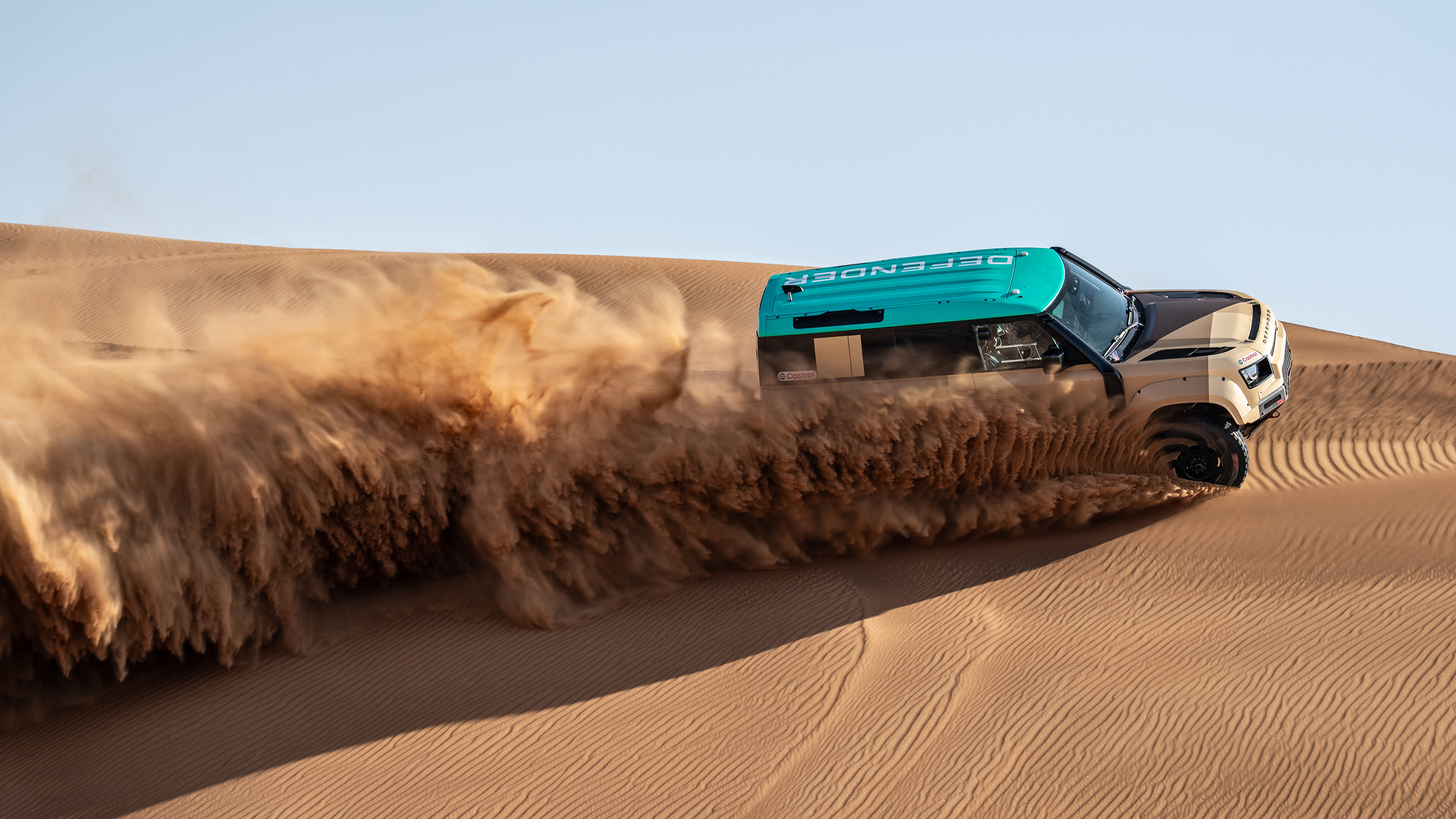
One specific part of that clever computing system is the new ‘Flight Mode’. And yes, you did read that right. The Defender rally team has developed a programme that helps the D7X-R cope with the endless dune hopping and zero-gee moments encountered throughout the world’s most hardcore rally raid. Basically, Flight Mode adjusts torque delivery from the engine to the wheels whenever the vehicle is airborne to make sure it lands properly and protects the driveline. It helps the Defender fly straighter and in a more controlled manner, and prevents shocking the entire transmission when those tyres finally hit the ground. With the dunes topping out at 250-metres (820 feet) high, getting it wrong can be a rally-ending proposition. After all, it’s not the fall that kills you - it’s the landing.

Or more specifically a wrap, seeing as paint would last roughly ten seconds in the harsh environment of the Dakar. This year, it’s called ‘Geopalette’, inspired by the arid tones (think sand, stone and earth) of the countryside it’s due to navigate, a kind of über-urban geometric camo with an aqua blue roof reminiscent of an oasis in the desert. Although that impression might be more of a mirage, because this Defender will no doubt disappear before you know it. With gloss black wheelarches, twin snorkels, bumpers and sills, plus black wheels shod in BF Goodrich tyres, it makes one hell of an impression. The petition starts here to make this an option for roadgoing Defenders…

It’s not that Dakar drivers aren’t allowed to drive standard Defenders, more that not everyone gets to play with D7X-Rs. Dakar-legend Stéphane Peterhansel and Mika Metge, Rokas Baciuška and Oriol Vidal and Sara Price with Sean Berriman are all set to grind their way through the 5,000km of timed stages, sweating through 80+ hours of competitive driving. But behind the rockstar drivers and navigators are a squad of the best rally support in the business. And while the Defender might be the perfect base for a hardcore rally-raider, it’s the support teams, mechanics and crews that make it all possible.
Defender OCTA | Master of Extreme Performance, Everywhere
Thank you for subscribing to our newsletter. Look out for your regular round-up of news, reviews and offers in your inbox.
Get all the latest news, reviews and exclusives, direct to your inbox.
